Curtis.Castiglione@ROzebra.com

Why Won't My Car Go Over 30 MPH? Causes and Fixes
By Curtis Castiglione
You’re pulling out of your neighborhood or merging onto a busy secondary road. You press the accelerator, expecting the usual surge of power, but the needle stops dead at 30. No matter how hard you push the pedal, the engine either screams without moving the car faster or simply bogs down and shakes.
It’s a frustrating, often scary feeling—like your car has suddenly developed a mind of its own or an "invisible wall" has been placed in your path. As a technician, I hear this complaint frequently. While it feels like your vehicle is on the verge of a total meltdown, this symptom is usually a calculated move by your car’s computer to prevent a much more expensive repair.
Understanding Limp Mode and Reduced Engine Power
When your vehicle refuses to exceed 30 to 45 MPH, it has likely entered limp mode. This is a security feature programmed into the Electronic Control Unit (ECU). Think of it as a "safe mode" for your car.
When the computer detects a reading from a sensor that is way outside the normal range—indicating a serious problem with the engine or transmission—it intentionally restricts performance. By capping your speed and limiting engine RPMs, the car ensures you can "limp" off the highway or to a nearby shop without the engine or transmission suffering catastrophic, permanent damage. When this happens, you will almost certainly see a check engine light or a "Reduced Engine Power" message on your dashboard.
Most Common Causes for the 30 MPH Limit
There are several mechanical and electronic issues that can trigger this defensive state or physically prevent your car from accelerating.
1. Transmission Problems
If your car's computer detects that the transmission is slipping or that a transmission solenoid has failed, it may lock the vehicle into a single "limp gear"—usually second or third gear. This prevents the transmission from shifting into higher gears, which effectively caps your speed to protect the internal clutches and gears from burning out.
2. Clogged Catalytic Converter
Your engine is essentially a giant air pump; it needs to breathe in air and push out exhaust. If your catalytic converter is clogged or melted internally, the exhaust gases have nowhere to go. The backpressure builds up, "choking" the engine. This leads to severe engine hesitation and a physical inability to reach higher speeds.

3. Fuel Delivery Faults
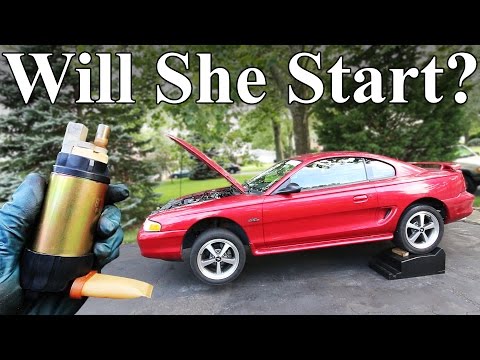
To go fast, your engine needs a specific amount of "juice." If your fuel pump is failing or your fuel filter is completely restricted, the engine might run fine at idle but starve when you demand more power. When the fuel supply cannot meet the demand, the car bogs down, creating significant acceleration problems.
4. Electronic Sensor Failures
Modern engines rely on a delicate balance of air and fuel managed by sensors. If the throttle body is dirty or the Mass Air Flow (MAF) sensor fails, the ECU loses its ability to calculate how much air is entering the engine. To prevent a condition that could melt a piston, the computer triggers limp mode immediately.
How to Diagnose the Problem
Before you start worrying about the price of a new engine, you need to "interrogate" the computer. When your check engine light is on, the car stores diagnostic trouble codes (DTCs).
I always encourage drivers to use an OBD-II scanner—available at most auto parts stores—to read these codes before authorized repairs begin. A code like P0121 might point to a simple throttle position sensor issue, while a P0420 points toward the exhaust. Knowing these codes allows you to have an informed conversation with your mechanic and prevents you from paying for parts you do not actually need.

Is It Safe to Continue Driving?
In short: No. While limp mode is designed to get you to a safe location, it is not meant for daily commuting.
Driving a car that won't go over 30 MPH is a major safety hazard, especially on roads where other drivers are traveling at 50 or 60 MPH. Furthermore, if the root cause is a mechanical issue like a clogged exhaust or a fuel delivery problem, continuing to drive can lead to engine overheating or even fire hazards.
Typical Repair Costs
The cost to fix a vehicle stuck in limp mode depends entirely on the component that failed. Here are some realistic U.S. dollar ranges for common repairs:
- Sensor Replacement (MAF or Throttle Sensor): $150 to $400
- Fuel Pump Replacement: $400 to $900
- Transmission Solenoid Repair: $300 to $700
- Catalytic Converter Replacement: $800 to $2,500
Frequently Asked Questions
Can I reset limp mode by turning the car off and on? Sometimes. Cycling the ignition can occasionally clear a temporary electronic glitch, allowing the car to drive normally for a short time. However, the physical problem remains and will likely trigger the speed limit again very soon.
Will a bad battery cause this? Yes. Modern vehicles are incredibly sensitive to voltage. If your battery or alternator is failing, the ECU may receive "dirty" power, causing it to throw the car into limp mode as a precaution.
Conclusion
If your car won't go over 30 MPH, your vehicle is trying to protect itself from a larger disaster. Do not ignore the warning signs. By retrieving your diagnostic trouble codes early, you can identify whether you’re facing a simple sensor swap or a more involved mechanical repair. Taking action quickly is the best way to save your engine—and your wallet.
Disclaimer: Speed-limiting symptoms and repair procedures vary significantly by vehicle make, model, engine type, transmission, and maintenance history. Always consult a certified professional for a definitive diagnosis.



No Comments Yet
Be the first to comment on this article.