Curtis.Castiglione@ROzebra.com

Why Does My Car Jerk While Driving at a Constant Speed?
By Curtis Castiglione
Imagine you are cruising down the highway, the speed limit is set, and your foot is steady on the gas pedal. Everything seems perfect until, suddenly, the car feels like it is gasping for air or stumbling over its own feet. Some of my customers describe it as a rhythmic hiccup, others call it a surge or stutter, but most simply ask the same frustrating question: Why does my car jerk while driving at a constant speed?
From the driver’s seat, it feels like the car is momentarily losing its rhythm. As a technician, I know that when a vehicle loses that smooth flow while maintaining a steady velocity, it is usually a sign that the engine's combustion process is being interrupted. To keep your car moving forward, your engine requires a precise mixture of air, fuel, and a well-timed spark. If any of these components fail for even a millisecond, you feel that unsettling jerk.
Common Causes of Jerking and Engine Hesitation
When we get your car into the shop, we look at the Combustion Triangle: air, fuel, and spark. Here are the most common culprits that cause that jerking sensation.
1. Ignition System Issues (Spark Plugs and Coils)
The most frequent culprit behind this sensation is an engine misfire. A misfire occurs when one or more cylinders fail to ignite the fuel-air mixture properly. This is often caused by worn-out spark plugs or failing ignition coils.

Spark plugs are the heart of the combustion process. If the gap is too wide or the electrode is fouled, the spark may struggle to jump across, causing the engine to stumble. Similarly, ignition coils provide the high-voltage electricity needed for those plugs. A coil might work fine under heavy acceleration but struggle to maintain a consistent output during a steady cruise.
2. Fuel System Failures
If your fuel injectors are dirty or clogged, they cannot deliver a consistent mist of gasoline into the cylinders. This creates a lean condition where there is too much air and not enough fuel, which causes engine hesitation.
Furthermore, a failing fuel pump might be unable to maintain the constant pressure required to keep the engine running smoothly. If the pump flickers in its performance, the engine will starve for a split second, resulting in a jerking motion.
3. Airflow and Sensor Problems
Your car’s computer relies on the mass airflow sensor (MAF) to determine how much air is entering the engine. If this sensor is dirty, it sends incorrect data, leading the computer to inject the wrong amount of fuel. Likewise, a carbon-filmed throttle body can cause the butterfly valve to stick slightly, creating a choppy feeling as the car tries to find the right balance of air.
4. Transmission Problems
In some cases, the problem isn’t the engine at all, but rather transmission problems. If you feel a shudder that resembles driving over a rumble strip, it could be the torque converter clutch. This component locks the engine and transmission together at cruising speeds for better fuel economy. If the fluid is old or internal seals are leaking, the clutch may slip in and out of engagement, creating a rhythmic jerking sensation.
How to Diagnose the Problem
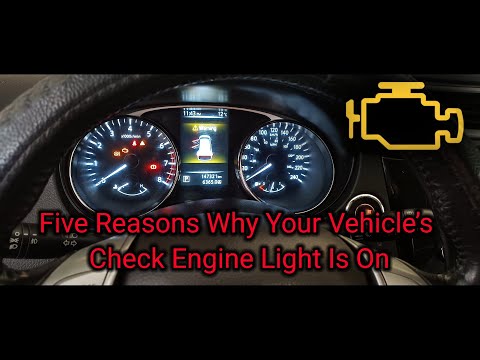
The first thing I look for is a check engine light. Even if the light is not currently flashing, the computer often stores pending codes that can point a technician toward the specific cylinder that is misfiring or a sensor that is out of range.
If no codes are present, we perform a live data scan while driving the vehicle. This allows us to monitor fuel trim and ignition timing in real-time. We also inspect the vacuum lines for leaks, as unmetered air entering the system is a common cause of surging.
Is It Safe to Continue Driving?
While a small hiccup might seem like a minor annoyance, it is rarely a good idea to ignore it. A car that jerks at constant speeds is telling you that the combustion process is unstable.
- Catalytic Converter Damage: If the cause is an engine misfire, unburned fuel can travel down the exhaust and melt your expensive catalytic converter.
- Stalling Risk: If the cause is a failing fuel pump, the car could stall completely in the middle of traffic, leaving you stranded.
If your car begins to jerk violently or the check engine light starts flashing, you should pull over safely and seek a tow immediately.
Typical Repair Costs
The cost to fix a jerking vehicle varies depending on the root cause:
- Spark Plugs: $100 to $250
- Ignition Coil Replacement: $150 to $300
- MAF Sensor or Throttle Body Cleaning: $100 to $150
- Fuel Pump or Transmission Issues: $500 to $1,500+
Frequently Asked Questions
Can bad gas cause my car to jerk? Yes. If you recently filled up and the car started jerking shortly after, you may have water or contaminants in your fuel.
Will a dirty air filter cause jerking? While a dirty filter usually causes a loss of power, an extremely restricted filter can cause the engine to struggle for breath during steady driving.
Why does it only happen when I use cruise control? Cruise control relies on sensors to maintain a precise speed. If a sensor is failing, the system may over-correct the throttle, leading to a surging feeling.
Conclusion
When your car loses its smoothness at a constant speed, it is a clear signal that something is interrupting the harmony of your engine or drivetrain. Whether it is an engine misfire from old spark plugs or a sensor sending bad data, early diagnosis is the key to preventing a small jerk from becoming a massive repair bill.
Please note that vehicle symptoms can have multiple causes depending on the specific make, model, mileage, and maintenance history of your car. This guide is for informational purposes and should not replace a professional physical inspection. Always consult with a certified mechanic for an accurate diagnosis.



No Comments Yet
Be the first to comment on this article.