Curtis.Castiglione@ROzebra.com
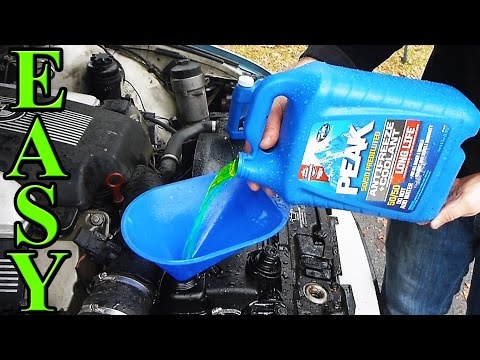
When Should You Change Your Car's Coolant?
Engine coolant, often called antifreeze, is one of the most critical fluids in your vehicle. It performs a difficult balancing act: keeping your engine from melting down in the summer heat and preventing the water in your cooling system from freezing and cracking the engine block in the winter.
Beyond temperature regulation, coolant contains chemical additives that protect the internal metal, plastic, and rubber components of your cooling system from corrosion. However, these additives do not last forever. Understanding when to service this system is key to avoiding some of the most expensive repairs in automotive ownership.
What is a Coolant Service?
A coolant service is more than just topping off the fluid. Over time, coolant becomes contaminated with debris or loses its chemical ability to fight corrosion. A professional service typically takes one of two forms:
- Drain and Fill: The technician drains the old fluid from the radiator and engine block and replaces it with fresh coolant.
- Coolant Flush: This involves using specialized equipment to push old fluid and contaminants out of the entire system—including the heater core (the small radiator that provides heat to the cabin) and hoses—before refilling it with a precise mixture of fresh coolant and distilled water.

When Should You Change Your Car's Coolant?
The timing for a coolant change has changed drastically over the last two decades. There is no longer a one-size-fits-all mileage for this service.
Modern vs. Older Vehicles
In the past, it was common to change coolant every 30,000 to 60,000 miles. However, most modern vehicles use extended-life coolant formulations. Many manufacturers now recommend the first coolant service at 100,000 or even 150,000 miles, or after a specific time interval, such as 5 to 10 years, whichever comes first.
Check Your Maintenance Schedule
Because intervals vary so widely between a compact car, a heavy-duty truck, and a hybrid, you should never assume a generic mileage applies to your vehicle. Always consult your owner’s manual or the manufacturer’s maintenance schedule to find the specific requirements for your year, make, and model.
Why Coolant Maintenance Matters
Coolant is a hardworking chemical cocktail. Over time, the protective additives in the fluid break down and the coolant can become acidic. When this happens:
- Corrosion: Acidic fluid eats away at the metal inside your radiator and engine, leading to pinhole leaks.
- Scale and Rust: Old coolant allows deposits to build up, which can clog the narrow passages of the radiator and heater core.
- Reduced Lubrication: Coolant helps lubricate the water pump's internal seal. When the fluid degrades, the pump is more likely to fail and leak.

What is Typically Checked or Serviced?
When you take your vehicle in for a coolant service, a professional technician does more than just swap the fluid. A comprehensive inspection usually includes:
- Pressure Testing: Checking the entire system to identify hidden leaks.
- Hose Inspection: Checking radiator hoses for soft spots, swelling, or brittleness.
- Radiator Cap: Testing the cap to ensure it holds the correct pressure.
- Cooling Fans: Verifying that the electric fans trigger at the correct temperature.
- Component Check: Looking for signs of seepage around the water pump, thermostat housing, and expansion tank.
Factors That Can Change the Maintenance Interval
Certain driving habits—often called severe-service conditions—can cause coolant to degrade faster. You may need to change your coolant sooner than the standard interval if you frequently engage in:
- Towing or hauling heavy loads.
- Driving in extremely hot climates.
- Extensive idling or heavy stop-and-go city traffic.
- Off-road driving in dusty or muddy conditions.
If you fall into these categories, your technician can use test strips or a tool called a refractometer to check the pH level and freeze protection of your coolant to see if it has reached the end of its life early.
What Can Happen if Maintenance is Neglected?
Neglecting your cooling system is a high-stakes gamble. The most common result of old or low coolant is engine overheating.
If an engine gets too hot, the metal components can expand beyond their limits. This often leads to a blown head gasket or a warped cylinder head—repairs that typically cost thousands of dollars. In extreme cases, internal corrosion can lead to total engine failure, requiring a complete engine replacement.

A Note on Leaks: The Bigger Warning Sign
If you find yourself repeatedly adding coolant because the low coolant light comes on, this is not a maintenance issue; it is a repair issue. Cooling systems are sealed. If fluid is disappearing, there is a leak. Simply adding more fluid does not fix the underlying problem and can lead to a sudden breakdown. A technician should diagnose the source of the leak, whether it is a faulty hose, a leaking radiator, or a failing water pump.
Questions to Ask Your Repair Shop
Before approving a coolant service, consider asking your service advisor:
- Does my vehicle's specific maintenance schedule call for a coolant change at this mileage?
- Are you using the specific type of coolant (such as OAT or HOAT) required by my manufacturer?
- Will this be a simple drain and fill or a full system flush?
- Does the service include a pressure test to check for leaks?
- Are the radiator hoses and the thermostat being inspected as part of this service?
Cost Considerations
The cost of a coolant service varies based on the vehicle's fluid capacity and the type of coolant required. Specialized coolants for European or high-performance vehicles are often more expensive than universal types. Additionally, a machine-powered flush involves more labor and equipment than a standard drain and fill. While the service has a cost, it is a fraction of the price of replacing a radiator or an entire engine. Always refer to your manufacturer's maintenance schedule as the primary guide for when to perform this service.



No Comments Yet
Be the first to comment on this article.