Curtis.Castiglione@ROzebra.com

What Is a Shop Press Used For?
What Is a Shop Press Used For?
If you have ever tried to remove a metal bushing from a control arm or separate a wheel bearing from a steering knuckle, you know that some car parts are not held together by bolts alone. Many automotive components are joined by what is known as an interference fit, where one part is slightly larger than the hole it is being pushed into.
To move these parts, you need more than just muscle and a hammer; you need a significant amount of controlled force. This is where a shop press comes into play. Whether you are a hobbyist or a dedicated mechanic, understanding what is a shop press used for can help you decide if this heavy-duty equipment belongs in your garage.
What Is a Shop Press?
A shop press is a piece of garage equipment consisting of a heavy steel frame and a powerful hydraulic ram. The frame is typically shaped like a large rectangle—often called an H-frame—with a movable horizontal bolster, or bed, that holds the workpiece. The ram is mounted at the top of the frame and points downward toward the bed.
Most shop presses used in home garages or professional repair shops are hydraulic. They use a pump—either a hand-operated lever or a foot pedal—to force hydraulic fluid into a cylinder. This pressure moves a piston, or ram, downward with thousands of pounds of force. While they may look like simple machines, they are among the most powerful automotive tools a mechanic can own.

What Does a Shop Press Do?
The primary function of a shop press is to apply extreme, steady pressure to components to either join them together or push them apart. In the world of vehicle repair tools, it is the go-to solution for any part that is "pressed on."
Beyond just moving parts, a press can be used for:
- Straightening metal: If a steel bracket or a thick suspension component has been slightly bent, a shop press can apply the specific, localized pressure needed to push it back into its original shape.
- Fabrication: When used with specialized dies, a press can bend metal for custom projects, such as creating brackets for a project car.
- Component Assembly: Many engine and drivetrain parts require being seated at a specific depth with high pressure to ensure they do not move during operation.
How Is a Shop Press Used?
Using a shop press requires a combination of patience and precision. Unlike a hammer, which uses "shock" force that can bounce or vibrate, a press uses "static" force that builds slowly.
- Setup: The process begins by placing the component on the press bed. The bed usually features heavy steel plates, called arbor plates, which support the part while allowing the piece being removed (like a bolt or bearing) to pass through a gap in the center.
- Alignment: The operator must align the ram perfectly with the component. This is the most critical step. If the ram is off-center, the force will be applied unevenly, which can "cock" the part to one side, potentially damaging both the component and the press.
- Operation: Once aligned, the operator pumps the handle. As the ram contacts the part, resistance builds. With a few more pumps, the interference fit is overcome, and the part—such as a bearing—is slowly and smoothly pushed out of its housing.
When Would You Need a Shop Press?
You would typically need a shop press when performing major suspension, drivetrain, or engine work. These are jobs where standard car tools like wrenches and sockets simply cannot provide the necessary leverage.
Real-World Examples:
- Wheel Bearings: On a front-wheel-drive car like a Honda Civic, the front wheel bearings are often pressed into the steering knuckle. You cannot simply pull them out; you must use a press to push the old bearing out and seat the new one.
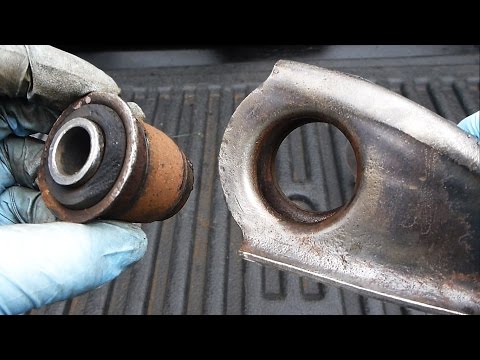
- Control Arm Bushings: On a high-mileage truck, like a Ford F-150, the rubber bushings in the suspension eventually dry out and crack. These bushings are encased in a metal sleeve pressed into the control arm. A shop press allows you to swap these out so you do not have to buy an entirely new, expensive control arm assembly.
- U-Joints: Replacing the universal joints on a truck's driveshaft often requires a press to move the caps in and out of the yokes without damaging the needle bearings inside.
- Wheel Studs: If you accidentally cross-thread a lug nut and snap a wheel stud, a press is the safest way to install a new stud into the wheel hub.
Types of Shop Presses
When shopping for mechanic tools and garage tools, you will generally see two types of presses based on their form factor:
- Benchtop Presses: These are smaller units designed to be bolted to a workbench. They usually have a capacity of 6 to 12 tons. They are excellent DIY automotive tools for smaller jobs like U-joints or small bushings, but they lack the height and width for larger components like axle shafts.
- Floor Presses: These are large, standalone units that sit on the garage floor. They offer much more vertical space and higher weight capacities, commonly ranging from 20 to 50 tons.
Additionally, you can choose between manual (hand-pumped) and air-over-hydraulic (powered by an air compressor). Air-powered models are much faster and less physically demanding, which is why they are common professional automotive equipment.
What Should You Look for When Choosing One?
When looking at automotive equipment for your garage, the most important factor for a press is tonnage. This refers to the maximum amount of force the press can exert.
For most DIY mechanics, a 12-ton press is the bare minimum, while a 20-ton press is considered the "sweet spot." It provides enough power to handle almost any passenger car or light truck job without straining the frame.
You should also consider:
- Throat Width: The distance between the vertical frame posts. You need this to be wide enough to fit your largest parts (like a full steering knuckle).
- Bed Adjustability: Look for a model where the bolster can be easily raised or lowered to accommodate different lengths of parts.
- Construction Quality: Heavy-duty steel is vital. A frame that flexes or bows under pressure is dangerous and will cause parts to go in crooked.
DIY vs. Professional Use
A shop press is a specialized tool. If you only plan on changing your oil and rotating your tires, you likely do not need one. However, if you enjoy rebuilding older vehicles or performing your own suspension repairs, it can pay for itself quickly.
Many DIYers choose to take their parts to a local machine shop and pay a fee to have bearings or bushings pressed. This is a great option for occasional repairs. However, if you find yourself making frequent trips to the shop, adding a press to your collection of car tools provides the convenience of finishing the job in your own garage on your own schedule.
Common Mistakes When Using a Shop Press
- Improper Support: If a steering knuckle is not level on the arbor plates, the new bearing will go in at an angle. This can ruin the bearing and potentially the housing.
- Using the Wrong Driver: When pressing a bearing, you should only apply force to the "race" (the metal ring) that is being seated. If you push on the center of the bearing, you will destroy the internal ball bearings before the part is even installed.
- "Shocking" the Press: If a part is stuck, never hit the ram or the part with a hammer while it is under hydraulic pressure. This can cause the part to fail catastrophically and fly out of the press.

Safety Considerations
Because a shop press generates enormous force, safety is paramount. When thousands of pounds of pressure are released suddenly, parts can move with dangerous speed.
- Eye Protection: Always wear safety glasses. If a cast-iron part or a hardened steel bearing shatters under pressure, the fragments can fly out like shrapnel.
- Stance: Stand to the side of the press while pumping, rather than directly in front of it. This keeps you out of the line of fire if a part slips.
- Secure Workpiece: Ensure the arbor plates are securely seated on the bolster. If the part looks like it might slip or "spit out," stop and reset your work.
- Capacity: Never exceed the rated capacity of the press frame. If the frame starts to creak or bow, stop immediately.
Frequently Asked Questions
Can I use a large hammer and a punch instead of a shop press? In some cases, you can, but it is not recommended for precision parts. Hammers apply shock force which can scar metal surfaces or bend components. A press applies smooth, constant pressure that is much safer for the metal.
Is a 12-ton press enough for a DIY mechanic? A 12-ton press is sufficient for many small bushings and U-joints. However, for stubborn wheel bearings or heavy-duty truck parts, a 20-ton press is often required to get the job done without straining the equipment.
Do I need special accessories for my shop press? Yes, you will often need a set of bearing separators and drivers. These are metal plates and discs of various sizes that help you apply pressure to the exact spot needed without damaging the rest of the component.
Conclusion
So, what is a shop press used for? It is the ultimate solution for moving parts that are held together by friction and extremely tight tolerances. Whether you are refreshing the suspension on a classic car or replacing a hub bearing on the family SUV, this tool allows you to perform professional-level repairs in a home setting. While it requires a bit of floor space and a healthy respect for the forces involved, it is an invaluable piece of garage tools for anyone looking to go beyond basic bolt-on maintenance.



No Comments Yet
Be the first to comment on this article.