Curtis.Castiglione@ROzebra.com
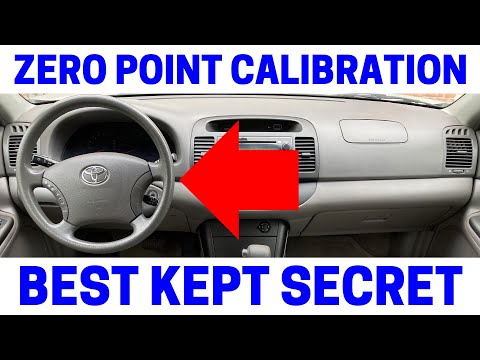
Understanding Electronic Power Steering (EPS) and SAS Calibration
Have you ever been driving perfectly straight down a flat highway, but noticed your steering wheel is tilted a few degrees to the left? Or perhaps you’ve felt a strange, jerky tug while turning a corner, almost as if a ghost is trying to steer the car for you?
For many drivers, the most confusing moment happens right after a routine service—like a battery replacement or a wheel alignment. You start the car, and suddenly the dashboard lights up with a symbol of a car with wavy lines (the Electronic Stability Control light) or a warning that says 'Steering Assist Reduced.' It feels like your car is suddenly confused about which way it is pointing. In a very literal, digital sense, it is.
From Hydraulics to High-Tech: What is EPS?
In the past, steering was a purely mechanical and hydraulic affair. You had a pump, some fluid, and a belt. If the steering felt 'off,' it was usually because of a leak or a worn-out metal joint. Today, most modern vehicles have transitioned to Electronic Power Steering (EPS).
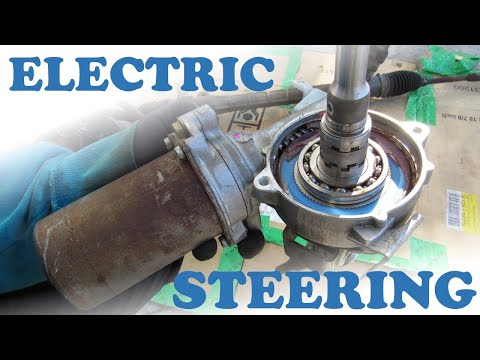
In an EPS system, the heavy lifting is done by an electric motor mounted directly to your steering column or the steering rack. This motor doesn’t just guess how much help to give you; it takes orders from a computer. That computer relies on one critical 'eye': the Steering Angle Sensor (SAS).
The Eyes of Your Car: The Steering Angle Sensor
The Steering Angle Sensor (SAS) measures exactly how many degrees you have turned the wheel and how fast you are turning it. This data is the heartbeat of your vehicle’s safety systems. Your car’s computer uses it to determine:
- Assist Level: How much power the motor should provide (more help at low speeds for parking, less at high speeds for stability).
- Stability Control: Whether you are actually steering where you want to go, or if the car is sliding out of control.
- Lane Keep Assist: How to nudge you back into your lane if you drift.
The Zero-Point: Why Calibration is Mandatory
Think of your steering system like a digital kitchen scale. Before you weigh anything, you hit the 'tare' or 'zero' button to make sure the scale knows what 'nothing' feels like. In the automotive world, we call this Zero-Point Calibration.
The computer needs to know exactly what physical position represents 'dead-center.' If you replace a steering component, get a wheel alignment, or even if your battery dies and the computer loses its temporary memory, that zero reference point can be lost. When the SAS is uncalibrated, the computer might think you are turning right when you are actually driving straight.
Symptoms of a Miscalibrated System
When your car’s 'eyes' (the sensor) and its 'muscles' (the motor) are not in sync, you will notice several real-life symptoms:
- Erratic Steering Weight: The steering feels unnervingly light one second and heavy the next as the computer struggles to calculate the correct assist.
- The Invisible Tug: You feel a slight pull or vibration as the motor tries to 'correct' a steering angle it thinks is wrong.
- Phantom Stability Intervention: The car may suddenly tap the brakes on one side or reduce engine power because it thinks you are skidding, even on perfectly dry pavement.
- Warning Lights: The Traction Control (TCS) or Electronic Stability Control (ESC) lights stay illuminated on your dash.
Is It Dangerous?
It certainly can be. If your EPS system provides a sudden, unexpected surge of assistance while you are navigating a highway curve, it can startle you into over-steering. More importantly, in an emergency maneuver, an uncalibrated SAS can cause the stability control system to intervene incorrectly. By braking the 'wrong' wheel based on bad data, the car could potentially make a dangerous situation much worse.
Actionable Advice: What to Tell Your Mechanic
If you are experiencing these symptoms, simply clearing the error codes with a basic scanner is not enough. You need a professional zero-point calibration.
When you take your car in, be specific. Instead of just saying 'the steering feels weird,' give your technician these details to help them diagnose the issue quickly:
- Mention Recent Work: 'The symptoms started right after my alignment' or 'The lights came on after I jump-started the battery.'
- Use the Technical Term: 'I think the Steering Angle Sensor needs a zero-point calibration.'
- Describe the Intervention: 'The stability control light flashes even when I have plenty of traction and I am driving straight.'
Modern cars are essentially computers on wheels. Often, the mechanical problem you are feeling is not a broken metal part—it is just a computer that has forgotten where center is. A quick recalibration with a professional-grade diagnostic tool is usually all it takes to get your car back on the straight and narrow.
Written by Curtis Castiglione



No Comments Yet
Be the first to comment on this article.