Curtis.Castiglione@ROzebra.com

Understanding Automotive Scissor Lifts
What Is a Scissor Lift?
If you have ever spent a long Saturday afternoon crawling around on a cold concrete floor while trying to change the oil in your car or swap out brake pads, you have likely dreamed of a better way to get the vehicle off the ground. While floor jacks and jack stands are the most common automotive tools for beginners, they have their limits in terms of height, speed, and stability.
Many DIY enthusiasts eventually look for more efficient garage tools to make their projects less physically demanding. This is where the scissor lift comes into play. It is a robust piece of automotive equipment that bridges the gap between a basic floor jack and the massive, permanent lifts you see in professional repair shops.
What Is a Scissor Lift?
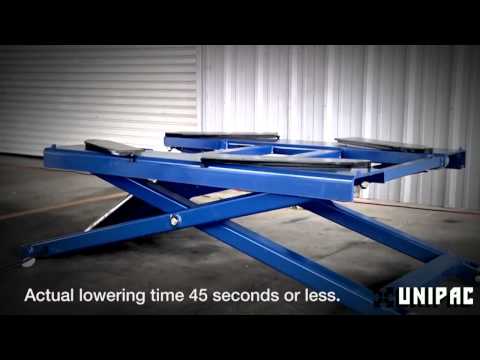
A scissor lift is a specialized vehicle lift designed to raise a car or truck to a comfortable working height using a folding mechanism that resembles a pair of scissors. Unlike a traditional two-post lift, which uses tall vertical columns and swing-out arms to grab the vehicle’s frame, a scissor lift typically consists of two parallel platforms that the vehicle drives onto or over.
The "scissor" name comes from the way the metal supports behave. When the lift is activated, hydraulic cylinders push the "legs" of the mechanism, causing them to extend upward in an accordion-style motion. This raises the platforms and the vehicle simultaneously. Because the lifting mechanism is located directly beneath the platforms, these lifts are often favored by people with limited space or lower garage ceilings.
What Does a Scissor Lift Do?
The primary job of a scissor lift is to provide a stable, elevated platform for vehicle maintenance. By raising the car several feet off the ground, it allows a mechanic or hobbyist to work on wheels, brakes, and lower body panels without constantly bending over or lying on a creeper.
In the world of professional automotive equipment, scissor lifts are prized for quick-service tasks. Because they lift the entire vehicle by its frame or designated lifting points, they provide enough clearance to remove all four tires at once. This is a major time-saver for tire rotations, suspension inspections, or brake overhauls. For the DIY mechanic, it transforms a cramped home garage into a much more functional workspace where you can actually see what you are doing.
How Is a Scissor Lift Used?
Using a scissor lift is generally more straightforward than setting up a two-post lift, but it requires careful attention to detail to ensure the vehicle remains balanced. Most models designed for home use are drive-over or flush-mount.
- Positioning: You center the vehicle over the lift platforms. It is vital to ensure the vehicle’s lifting points—the sturdy parts of the frame or pinch welds designated by the manufacturer—align with the rubber blocks or pads on the lift.
- Activation: Once positioned, you use a control box (usually a handheld pendant or a floor-mounted console) to engage the hydraulic pump.
- Locking: As the lift rises, you will hear a rhythmic clicking sound. This is the sound of the mechanical safety locks engaging. Once the vehicle reaches the desired height, you slightly lower the lift until it rests firmly on these locks.
Resting the car on the mechanical locks is a critical safety step. It ensures the car is supported by solid steel rather than relying solely on hydraulic pressure, which could theoretically fail.
When Would You Need a Scissor Lift?
A scissor lift is an excellent addition to a home shop when you find yourself performing frequent maintenance that requires wheel removal or side-access.
For example, if you own a heavy truck like a Chevrolet Silverado and a smaller car like a Honda Civic, a scissor lift with a high weight capacity can handle both. It makes jobs like a four-wheel brake bleed much faster because you aren't moving a floor jack from corner to corner.
It is also an ideal tool for vehicle detailing. If you spend hours polishing paint or applying ceramic coatings, a scissor lift allows you to bring the lower half of the vehicle up to eye level. This saves your back and ensures you don't miss any spots near the rocker panels or the bottom of the bumpers.

Types of Scissor Lifts
There are three main categories of these vehicle repair tools based on how high they can go:
- Low-Rise Scissor Lifts: These usually lift the car about two to three feet off the ground. They are perfect for tire shops and bodywork where you need the wheels off the ground but don't need to stand underneath the car.
- Mid-Rise Scissor Lifts: These typically reach heights of 48 to 60 inches. They offer a great balance for home garages, allowing enough room for oil changes, brake work, and most side-access repairs.
- Full-Rise Scissor Lifts: These can lift a vehicle six feet or higher, allowing a person to stand fully upright underneath. These are more common in professional shops and often require a thicker concrete floor for installation.
What Should You Look for When Choosing One?
When shopping for mechanic tools of this size, the most important factor is the weight capacity. You must choose a lift rated for significantly more than the heaviest vehicle you plan to service. If you own a large SUV or a work truck, a 6,000-pound or 7,000-pound capacity lift is usually the minimum starting point.
You should also consider:
- Power Requirements: Some scissor lifts run on standard 110-volt household outlets, while more powerful models require a 220-volt circuit (similar to a clothes dryer outlet).
- Footprint: Portable scissor lifts often have wheels and can be moved out of the way when not in use. Permanent models might be bolted to the floor or even recessed into a pit so they sit flush with the ground when lowered.
- Ceiling Height: Measure your garage! While scissor lifts are great for low ceilings, you still need to account for the height of the vehicle itself when it is fully raised.
DIY vs. Professional Use
Scissor lifts are unique because they bridge the gap between DIY automotive tools and professional automotive equipment. In a pro shop, a scissor lift is a production tool—meant for fast, repetitive work like oil changes.
For the DIYer, a scissor lift is often the only type of lift that will realistically fit in a residential garage. Most two-post lifts require ceilings that are 12 feet high or taller to accommodate the vertical columns. A mid-rise scissor lift can work comfortably in a garage with a 9-foot ceiling, providing a professional-grade lifting solution for the home enthusiast.

Common Mistakes When Using a Scissor Lift
The most common mistake is failing to check for under-car access. Because the scissor mechanism sits directly under the vehicle, it can block access to the center of the car. If you are planning to replace an entire exhaust system or remove a transmission, the cross-members of the scissor lift might get in your way.
Another mistake is neglecting the floor surface. Scissor lifts exert a tremendous amount of pressure on a relatively small area of concrete. Using one on cracked, uneven, or thin concrete can be dangerous. Always ensure your garage floor is level and meets the manufacturer's thickness requirements before setup.
Safety Considerations
Safety is paramount when using any car tools that involve lifting thousands of pounds over your head.
- Balance: Always verify that the vehicle is balanced. A car that is front-heavy (like a front-engine economy car) can become unstable if you remove a heavy component like a rear axle while it is on the lift.
- Mechanical Locks: Never work on a vehicle supported only by hydraulic pressure. Always lower the lift onto its mechanical safety locks.
- Clearance: Keep the area around the scissor arms clear of debris, tools, and power cords. The folding metal arms move with immense force and can easily crush anything caught in the mechanism.
Frequently Asked Questions
1. Can I park my car on top of a scissor lift when I'm not using it?
Yes, most drive-over scissor lifts are designed to be parked over. However, you should ensure the lift is fully lowered so your tires aren't resting on any moving parts or hydraulic hoses, which could cause wear over time.
2. Does a scissor lift require a special concrete floor?
Most mid-rise and low-rise scissor lifts require at least 4 inches of reinforced concrete that is in good condition. Always check the manufacturer's specifications, as full-rise models may require even thicker foundations.
3. Can I use a scissor lift to change my transmission?
It depends on the specific lift design. Many scissor lifts have a structure that sits directly under the center of the car, which may block access to the transmission. If you plan to do heavy drivetrain work, you should look for a clear-floor scissor design or use other car diagnostic tools and stands to supplement your access.
Conclusion
So, what is a scissor lift? It is a versatile, space-saving piece of equipment that provides a significant upgrade over basic floor jacks. While you might use specialized tools to find a problem, a scissor lift is the equipment that gives you the access needed to fix it comfortably. Whether you are a dedicated DIYer looking to make weekend maintenance easier or a hobbyist who wants to detail cars with professional precision, a scissor lift offers a stable and effective solution for any home garage.



No Comments Yet
Be the first to comment on this article.