Curtis.Castiglione@ROzebra.com
Timing Chain Tensioner Failure in Ford Triton Engines
If you own a Ford truck or SUV equipped with a 4.6L, 5.4L, or 6.8L Triton engine, you have likely experienced a moment of genuine concern during a cold start. You turn the key, and for the first few seconds, the engine emits a frantic, metallic rattling or slapping sound—almost like a handful of gravel being tossed around inside a metal bin.
Usually, the noise settles down once the engine warms up, perhaps transforming into a faint, rhythmic ticking that follows the RPMs. To many drivers, it seems like a minor nuisance or just an old engine quirk. But as a technician who has opened up hundreds of these engines, I can tell you: that sound is a frantic distress signal from the heart of your timing system.
The Technical Reality: What is Happening Inside?
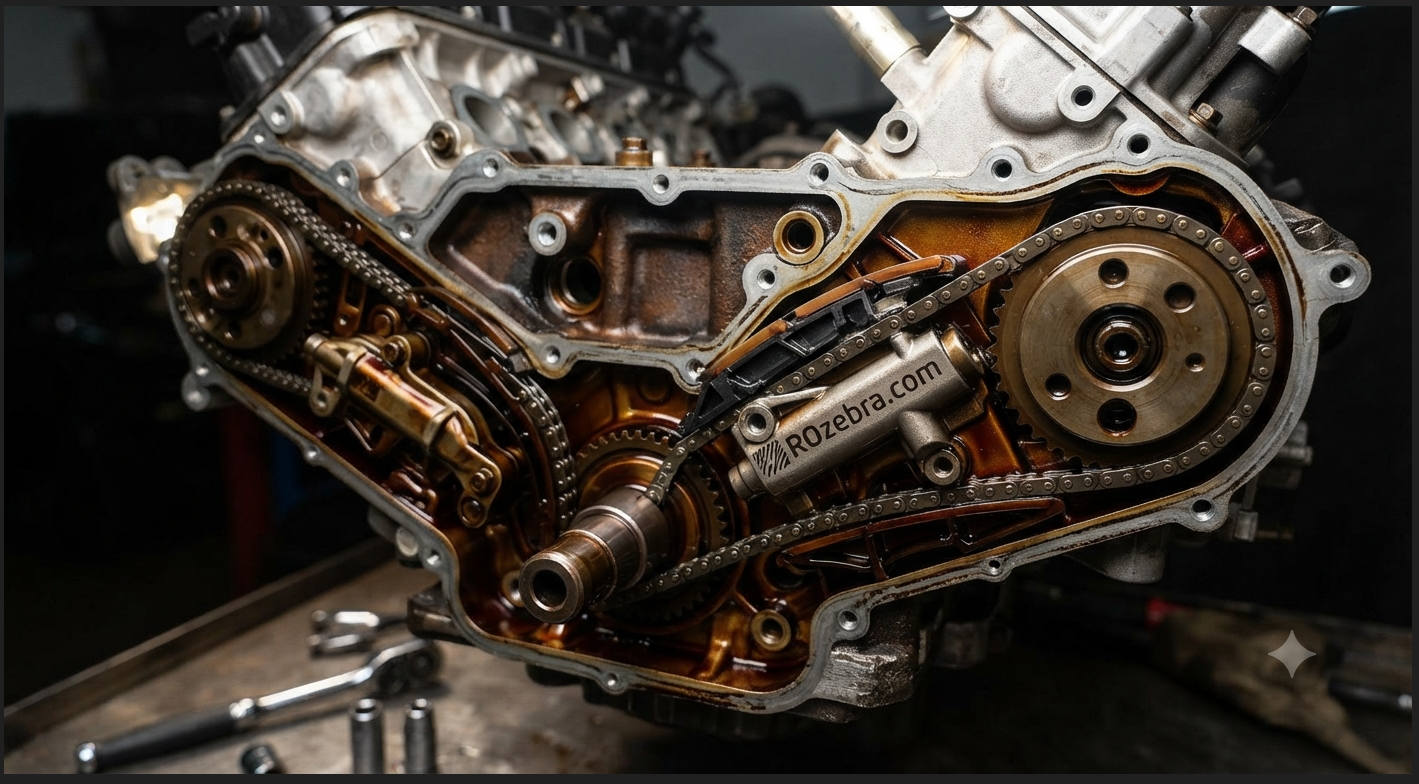
To understand why your Ford is complaining, we have to look at how these engines maintain their internal rhythm. Your Triton engine uses long metal chains to synchronize the rotation of the crankshaft with the camshafts. For this synchronization to stay perfect, the chains must remain under constant, precise tension. This is the job of the timing chain tensioners.
In the Triton series, these tensioners are hydraulic. They rely on the engine oil pressure to push a piston against the timing chain guides. The primary failure point is a relatively small, seemingly insignificant rubber gasket on the back of the tensioner housing.
Over years of heat cycles and high-pressure operation, this seal becomes brittle and eventually blows out. Once that seal is compromised, you have an internal oil leak. Instead of the oil pressure being used to keep the chain tight, the oil simply bleeds out from behind the tensioner and falls back into the oil pan.
The Domino Effect of Tensioner Failure
This failure creates a two-pronged attack on your engine health:
- Chain Slack: Because the tensioner is not pushing firmly, the chain goes slack. That slapping sound you hear on startup is the physical chain whipping against the plastic guides and the aluminum timing cover. Once oil pressure builds up enough to overcome the leak, the noise may fade, but the damage is already being done.
- Oil Pressure Drop: Because oil is escaping through the failed seal, the overall oil pressure in the top half of your engine drops. This starves the cam phasers and lash adjusters of the lubrication they need, leading to that diesel-like idling sound that many Triton owners mistakenly ignore.

Why You Should Not Wait: The Interference Risk
If left unaddressed, this issue is not just noisy—it is catastrophic. As the loose chain continues to slap against the plastic guides, it will eventually shatter them. These plastic fragments fall into the oil pan and get sucked up by the oil pump pickup screen. This blocks oil flow to the rest of the engine, leading to a total seizure.
Furthermore, the Triton is an interference engine. This means the valves and pistons occupy the same space at different times. If the chain becomes loose enough to jump a tooth on the sprocket, the timing is lost. The pistons will slam into the open valves, effectively destroying the engine in a fraction of a second.

Actionable Advice: What to Tell Your Mechanic
If you hear that characteristic rattle, your engine is on borrowed time. When you take your vehicle to the shop, do not just ask for an oil change. Be specific:
- Describe the Symptom: Mention the startup rattle and whether it disappears after the engine warms up.
- Check for Codes: Mention if your Check Engine light is on. Common codes related to this issue include P0011, P0012, P0021, or P0022, which indicate timing synchronization issues.
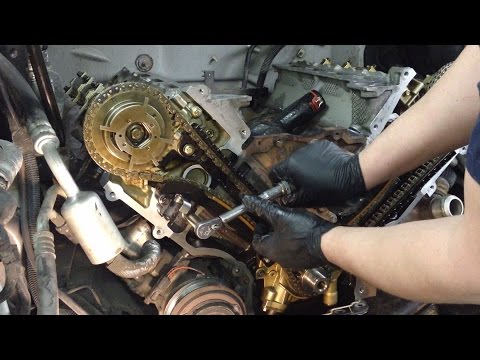
- Request a Full Timing Service: A proper fix is not just replacing the tensioners. A knowledgeable technician should replace the chains, guides, and the crankshaft sprocket as a complete kit.
- The Pro-Tip Upgrade: Ask your mechanic about installing cast-iron ratcheting tensioners. The original factory parts were plastic-bodied. Many veteran technicians prefer the older-style cast-iron units because they do not have the failure-prone rear seal and feature a mechanical ratchet that maintains tension even when oil pressure is low.
The Bottom Line
A rattling Triton engine is an engine at risk. While a timing system service is a significant investment, it is a fraction of the cost of a complete engine replacement. If you catch it early, you can keep your Ford on the road for another 100,000 miles. Ignore the gravel in the bin, and you might find yourself looking for a new truck entirely.
Written by Curtis Castiglione



No Comments Yet
Be the first to comment on this article.