Curtis.Castiglione@ROzebra.com

Sway Bar Noise Diagnosis
You are driving down a familiar street, and every time you hit a small pothole or transition onto a driveway, you hear it: a dull, metallic clunking or a persistent rattling coming from somewhere underneath your feet. It sounds like something is loose—perhaps a heavy component swinging around under the chassis.
The sound does not necessarily happen when you are driving on a perfectly smooth highway, but the moment the road gets a bit uneven, that thump-thump returns. You might even feel a slight shudder through the floorboards. It is the kind of noise that makes you want to turn up the radio to ignore it, yet deep down, you know your car is trying to tell you something is wrong.
In the shop, we call this the classic symptom of sway bar system wear.
What Does a Sway Bar Actually Do?
To understand the noise, you first have to understand the stabilizer bar, commonly called the sway bar. Its primary job is to keep your vehicle level. When you turn a corner, centrifugal force wants to pull the body of the car toward the outside of the turn—this is known as body roll.
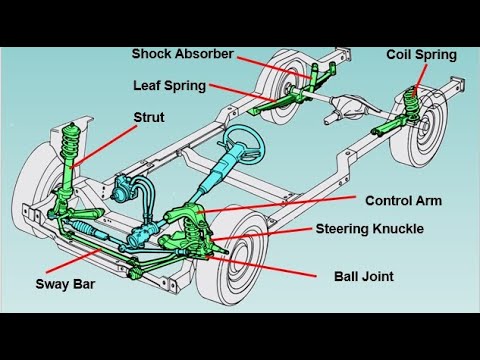
The sway bar is a thick, U-shaped metal rod that connects the left and right sides of your suspension. It acts as a bridge that distributes weight, pulling the inner side of the car down to match the outer side. This keeps the cabin flat, the tires planted, and your steering predictable.
While the bar itself is a solid piece of steel that rarely fails, the components that hold it in place are critical wear items.
The Two Main Culprits: Links and Bushings
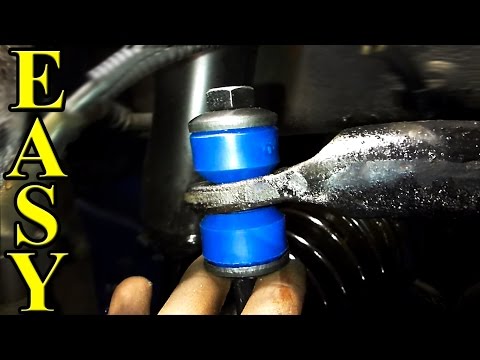
1. The Sway Bar Links
These are short rods with small ball joints on either end that connect the main bar to your struts or control arms. Over time, the internal grease dries out, or the protective rubber boots tear, allowing dirt and moisture to invade the joint.
This creates play—a tiny gap inside the joint. Because your suspension is under immense pressure, even a gap the size of a pinhead can result in a loud, sharp metallic clunk as the joint slams back and forth inside its housing every time the wheel moves up or down.
2. The Frame-Mounted Pivot Bushings
These are thick rubber mounts that bolt the sway bar directly to the vehicle’s frame. They act as pivots, allowing the bar to rotate smoothly as the suspension moves.
After years of exposure to road salt, engine heat, and constant friction, that rubber hardens, cracks, or compresses. When the hole in the center of the bushing becomes larger than the bar itself, the bar begins to jounce or rattle against the frame. This usually produces a deeper, more muffled thumping sound compared to the sharper click of a failing link.
Why You Should Not Ignore the Clunk
While a noisy sway bar link might seem like just a nuisance, it directly impacts your safety and driver confidence. The sway bar is your primary defense against excessive body roll during emergency evasive maneuvers.
If the links are worn or the bushings are shot, there is a delay in how quickly the suspension can react to a sudden change in direction. If you have to swerve to avoid an obstacle, the vehicle will lean much further and faster than intended. This can lead to several dangerous scenarios:
- Loss of tire traction: Your tires may lose their optimal contact patch with the road during sharp turns.
- Increased risk of a rollover: This is especially true in high-profile vehicles like SUVs or trucks.
- Accelerated wear: Loose movement puts extra stress on other expensive components, such as your struts and ball joints.
The Diagnostic Process
The good news is that diagnosing these parts is relatively straightforward. When you bring your vehicle in, tell your mechanic specifically that the noise occurs over bumps or during weight shifts, rather than when braking or accelerating.
A technician will perform a shake test or use a pry bar to check for movement in the links while the vehicle is under load. Because these parts wear at similar rates, we almost always recommend replacing them in pairs. If the left link has reached the end of its life, the right one usually is not far behind.
Actionable Advice
Sway bar links and bushings are generally some of the most affordable suspension repairs you can encounter. Replacing them can instantly restore that new car feel, making the steering feel tighter and the ride significantly quieter.
If you are hearing these rattles, do not wait until a nuisance becomes a mechanical failure. Addressing these wear items early ensures your vehicle remains predictable, stable, and safe when you need its stability the most.
Written by Curtis Castiglione



No Comments Yet
Be the first to comment on this article.