Curtis.Castiglione@ROzebra.com

Stop the Squeal: Common Brake System Symptoms
Written by Curtis Castiglione
You are coming to a stop at a red light, and suddenly, you hear it—a high-pitched, metallic screech that makes everyone on the sidewalk look your way. Or maybe you press down on the pedal and feel a strange vibration that travels up through your leg and into the steering wheel. As a driver, these sensations can be nerve-wracking. Your brakes are the most critical safety feature on your vehicle, and when they start acting up, they usually communicate through sounds and "feel" long before they actually fail.
Let’s look at these symptoms from the perspective of a technician. When you tell me your car is making a "crunchy" noise or the pedal feels like "stepping on a marshmallow," I am already mentally narrowing down the mechanical culprits. Understanding these warning signs can help you catch a problem before it becomes a safety hazard or an expensive repair bill.
1. The High-Pitched Squeal: Your Early Warning
In plain English, it sounds like a bird trapped under your wheel. From a technical standpoint, this is often the wear indicator doing its job. Most modern brake pads are equipped with a small metal tab designed to contact the brake rotor once the friction material wears down to a specific thickness.
This metal-on-metal contact creates a controlled vibration that produces that annoying sound. It is an intentional early warning system telling you that your pads have roughly 15 to 20 percent of their life remaining. While it isn't an immediate breakdown, it is the best time to schedule service before you cause damage to other components.

2. Deep, Rhythmic Grinding: Metal-on-Metal
If you ignore that squeal, it eventually turns into a deep, rhythmic grinding. This is what we call "metal-on-metal" braking. At this point, the friction material on the pad is completely gone. The steel backing plate of the brake pad is now clamping directly onto the cast-iron brake rotor.
Not only does this significantly increase your stopping distance, but it also destroys the rotors. This turns a simple pad replacement into a much more expensive repair because the rotors will likely be too scored or damaged to be resurfaced.
3. The Spongy or Soft Brake Pedal: Hydraulic Issues
If you have to "pump" the pedal to get the car to stop, or if the pedal slowly sinks to the floor while you are holding it at a stoplight, we are looking at a hydraulic issue.
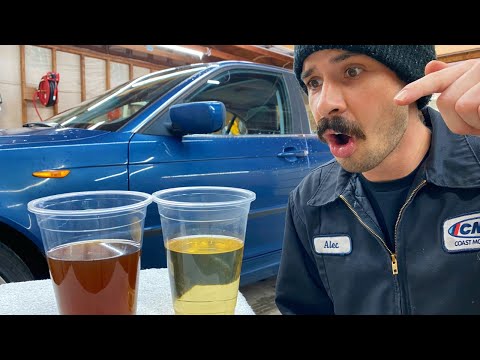
Brake fluid is hygroscopic, meaning it absorbs moisture over time. This moisture can cause internal corrosion in the master cylinder or lead to air bubbles in the brake lines. Since air is compressible and brake fluid is not, that air creates a soft, "mushy" feeling. In more serious cases, a sinking pedal could indicate a failing primary seal in the master cylinder, which is a genuine safety emergency.
4. Pulsating or Vibrating: Lateral Runout
If you feel a pulsating sensation through the pedal when braking at high speeds, you are likely dealing with lateral runout, often referred to as "warped rotors." Despite popular belief, rotors rarely actually bend. Instead, uneven heat distribution causes the metal to develop "high spots" or variations in thickness.
As the pads clamp down on a rotor that isn't perfectly flat, they bounce over these high spots, sending a vibration back through the hydraulic system to your foot and sometimes through the steering wheel.
5. Pulling to One Side: The Frozen Caliper
If your car feels like it wants to steer itself toward the ditch when you hit the brakes, you likely have a "frozen" or sticking caliper. The caliper is the hydraulic clamp that squeezes the pads against the rotor. If the internal piston or the sliding pins become seized due to dirt, rust, or extreme heat, one wheel will do more work than the other. This causes the car to pull toward the side where the brake is working harder.

What to Discuss With Your Mechanic
When you take your car in, being specific about the symptoms helps us diagnose the issue faster. Be prepared to answer:
- When does the noise happen? Is it only when the brakes are cold or after long periods of driving?
- Where do you feel the vibration? Is it in the steering wheel (usually front brakes) or the seat and pedal (often rear brakes)?
- How has the "feel" changed? Does the pedal feel hard, soft, or does it have a long travel before the brakes engage?
Brake issues never fix themselves, and they never stay "minor" for long. If you notice any of these symptoms, have a professional inspection performed immediately. It is much better to pay for a scheduled maintenance service than to pay for a tow truck and emergency repairs after a component failure. Your safety, and the safety of everyone else on the road, depends on a healthy brake system.



No Comments Yet
Be the first to comment on this article.