Curtis.Castiglione@ROzebra.com

How Often Should You Change Your Engine Air Filter?
An engine air filter is your vehicle’s first line of defense against the outside world. Just as you need clean air to breathe, your engine requires a steady stream of filtered air to create the combustion that moves your vehicle. Over time, this filter traps dust, dirt, pollen, and debris, eventually becoming restricted. Knowing how often should you change your engine air filter is key to maintaining your vehicle’s health and efficiency.
What is an Engine Air Filter?
The engine air filter is typically a pleated paper or synthetic element housed in a plastic box under the hood. Its primary job is to ensure that only clean air enters the intake manifold and the engine cylinders.
Without a functional filter, abrasive particles could enter the engine and cause premature wear on internal components like pistons, rings, and cylinder walls. Essentially, the filter acts as a high-tech "mask" for your engine, capturing microscopic contaminants before they can cause internal damage.
When Is This Service Normally Performed?
There is no single mileage interval that applies to every car, truck, or SUV. Maintenance schedules vary significantly between different makes and models.
- Common Intervals: Most manufacturers recommend a replacement every 15,000 to 30,000 miles. However, some modern vehicles can go up to 45,000 miles under ideal driving conditions.
- Routine Inspections: Many manufacturers suggest an annual inspection. Because driving habits vary, technicians often check the filter during a standard oil change or at major milestones such as 30,000, 60,000, and 90,000 miles.
- Time-Based vs. Mileage-Based: If you do not drive many miles, the filter material can still age or become a home for small rodents. In these cases, a time-based inspection (once a year) is more important than waiting for a specific mileage milestone.

Why the Service Matters
A clean air filter ensures the engine can "breathe" easily. While modern engine computers are excellent at adjusting the fuel-to-air ratio to compensate for a dirty filter, a severely restricted filter can still impact your vehicle’s drivability.
Regularly replacing the filter ensures the engine doesn't have to work harder than necessary to draw in air. This helps maintain peak performance, ensures smooth acceleration, and prevents long-term stress on engine components.
What Can Happen if It Is Neglected?
If an air filter is ignored for too long, it can become completely clogged. This restriction can lead to several issues:
- Reduced Engine Power: You may notice the vehicle feels sluggish or struggles to accelerate, especially when merging onto a highway or climbing hills.
- Misfires or Rough Idling: In extreme cases, a lack of air can cause an improper combustion mixture, leading to a rough idle or a "Check Engine" light.
- Engine Wear: If a filter becomes so old that the material begins to degrade or tear, dirt can bypass the filter entirely. Once abrasive dirt enters the cylinders, it can lead to expensive internal engine damage.
Factors That Can Change the Maintenance Interval
Your environment plays a massive role in how often you should change your engine air filter. You may need more frequent replacements if you encounter "severe service" conditions, such as:
- Dusty or Gravel Roads: If you live in a rural area or frequently drive on unpaved roads, your filter will fill with debris much faster than a vehicle driven only on clean pavement.
- Urban Environments: Heavy stop-and-go traffic and city smog contribute to faster filter clogging due to higher concentrations of airborne soot and particulates.
- Extreme Climates: Very hot or dry climates often have more airborne dust and sand that the filter must catch.
- Towing and Hauling: Heavy engine loads require the engine to process a higher volume of air over the same distance, which can lead to a faster buildup of dirt in the filter.
Don't Confuse the Two Filters
Many modern vehicles have two different air filters that serve completely different purposes:
- Engine Air Filter: Protects the engine and is located under the hood.
- Cabin Air Filter: Filters the air entering the passenger compartment through the heater and air conditioning vents.
These filters have different replacement schedules and are not interchangeable. Ensure you know which one your technician is recommending for service.
What Happens During an Inspection?
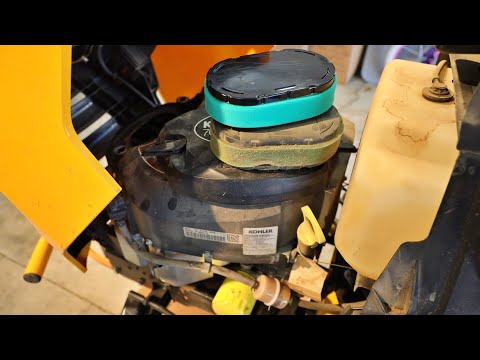
A professional technician will usually open the air filter housing and remove the element to perform a visual check. They will look for:
- Visible buildup of dirt, leaves, or insects between the pleats.
- Discoloration (a dark gray or black appearance compared to a white or off-white new filter).
- The "Light Test": A technician may hold a bright light behind the filter. If the light cannot pass through the pleats, the filter is likely too restricted and requires replacement.
Questions to Ask Your Repair Shop
Before approving a replacement, you may want to ask your service advisor:
- "Can you show me the current filter and point out why it needs to be replaced?"
- "Is the filter being replaced because it has reached the manufacturer-recommended mileage, or because it is visibly dirty?"
- "Is there any debris or nesting material inside the air box that needs to be cleaned out before the new filter is installed?"
Understanding the Cost of Replacement
The cost to replace an engine air filter is generally low compared to other major maintenance items. The total price is influenced by:
- Vehicle Type: Some high-performance or luxury vehicles use specialized filters that cost more.
- Labor Requirements: On most vehicles, the filter is easily accessible, but some designs require more time to access the air box.
- Part Quality: You can often choose between original equipment (OEM) filters or aftermarket alternatives.
When to Consult the Manufacturer’s Maintenance Schedule
Because every vehicle is engineered differently, your owner’s manual is the ultimate authority on how often should you change your engine air filter. It will list the specific interval for your make and model. If you do not have your physical manual, most manufacturers provide digital versions online.
Always check the section for "severe service" if you live in a particularly dusty or harsh environment, as this may shorten the replacement interval significantly. Replacing the filter is one of the most cost-effective ways to protect your engine’s longevity and ensure your vehicle runs as intended.



No Comments Yet
Be the first to comment on this article.