Curtis.Castiglione@ROzebra.com
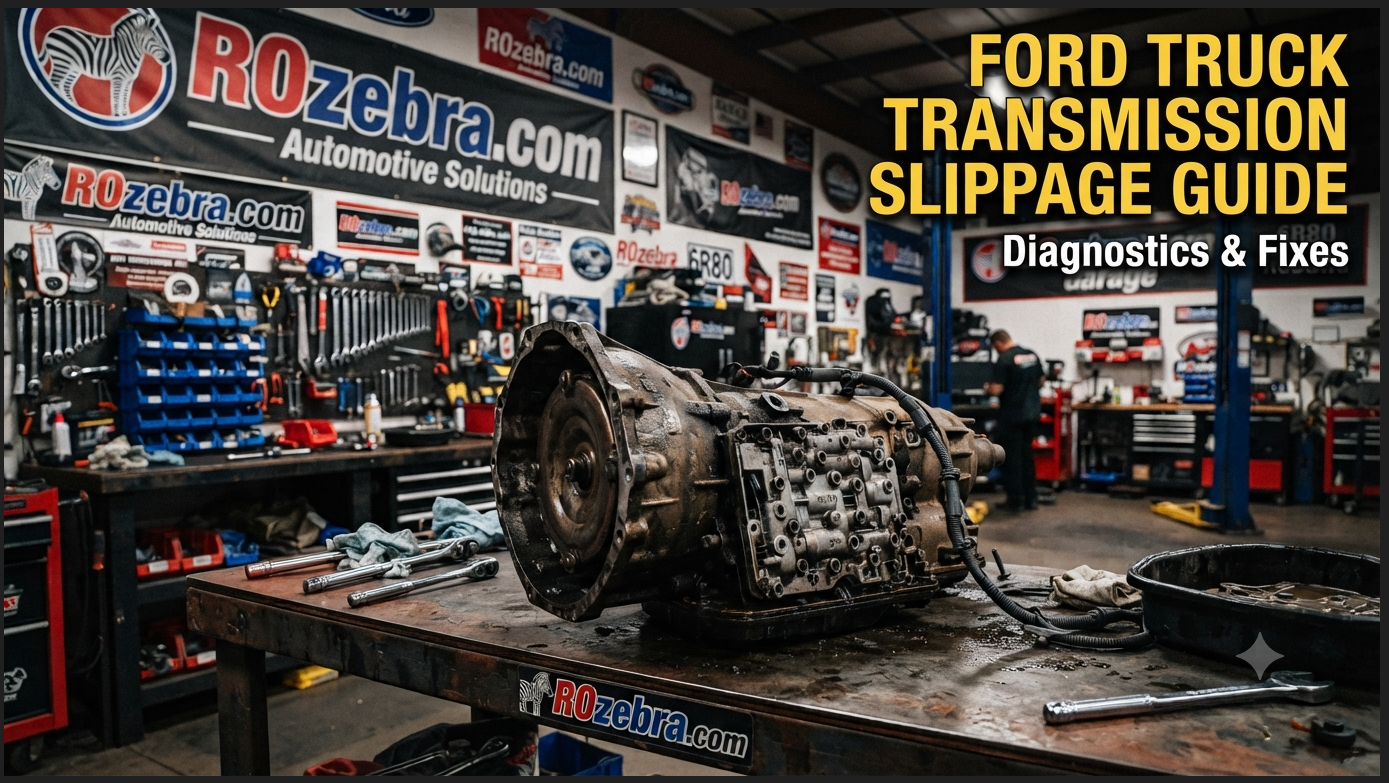
Ford Truck Transmission Slippage Guide
You are pulling out into traffic in your Ford F-150 or Super Duty, you press the accelerator, and for a split second, the engine revs high like you are in neutral before the truck finally lurches forward into gear. Maybe you are cruising down the highway and notice the RPM needle dancing up and down while your speed remains constant, or perhaps there is a distinct hesitation when the truck tries to find third or fourth gear. In the world of truck ownership, we call this transmission slippage. To a driver, it feels like a loss of connection between the engine and the wheels, almost as if the truck is second-guessing your commands. It is an unsettling sensation that often leaves owners wondering if they are looking at a minor sensor fix or a multi-thousand-dollar rebuild.
From a technician's perspective, transmission slippage in Ford platforms is rarely a mystery, but it is always a signal that the delicate balance of hydraulic pressure and friction has been disrupted. Your transmission relies on a sophisticated dance of fluid dynamics and mechanical grip to transfer power. When that dance falls out of sync, slippage is the result.
The Role of Transmission Fluid
The most common and fortunately most preventable cause is low or degraded transmission fluid. In many Ford models, the transmission fluid acts as a hydraulic pressurized medium that physically pushes internal components into place. If the fluid level is low due to a leak in the transmission cooler lines or a compromised pan gasket, there simply is not enough pressure to hold the clutches together firmly.

Furthermore, if the fluid is old and burnt, it loses its viscosity and heat-dissipating properties. When the fluid gets too hot, it thins out, and the internal seals may fail to hold pressure, leading to that sliding feeling during shifts.
Worn Clutch Packs and Mechanical Failure
If your fluid levels are fine, we then look at the internal friction components, specifically the clutch packs. Inside your Ford's automatic transmission is a series of steel plates and friction discs. These discs are coated with a gritty material designed to grab the steel plates and lock them together to change gears.
Over hundreds of thousands of miles, or much sooner if you frequently tow heavy loads without a proper cooling setup, that friction material simply wears away. Once the material is gone, the discs cannot grab the plates effectively, and they slide against each other.

This generates immense heat and is usually characterized by a sweet, burnt smell on the transmission dipstick. Once a clutch pack has physically worn down, no amount of new fluid will fix the problem; the unit will require a mechanical overhaul.
Solenoids and Electronic Management
In modern Ford trucks equipped with the 6R80 or the newer 10-speed 10R80 transmissions, the issue is often electronic or electro-mechanical, centering on the shift solenoids. Think of solenoids as the gatekeepers of your transmission. They are small electrical valves that open and close to direct fluid to the specific gear sets.
If a solenoid becomes clogged with debris or suffers an internal electrical failure, it may not open fully. This results in a partial application of fluid pressure, causing the gear to slip rather than engage firmly. Because these trucks are so heavily managed by the Powertrain Control Module, a failing solenoid will often trigger a Check Engine light or a Lead Frame-related error code.
Actionable Troubleshooting Steps
If you are experiencing these symptoms, the first step is a diagnostic check of the fluid.
- Check the Fluid Color: Pull the dipstick if your model has one, or have a technician check the standpipe level on sealed units. If the fluid is bright red, your problem is likely a solenoid or a sensor. If it is black and smells like charcoal, the clutch packs are likely the culprit.
- Scan for Codes: Use a diagnostic tool to check for stored trouble codes. Modern Fords are very good at reporting when a specific gear ratio is incorrect or when a solenoid is acting up.
- Monitor Temperatures: Keep an eye on your transmission temperature gauge. Excessive heat is both a cause and a symptom of slippage.

The Technician's Verdict
Ignoring slippage is the fastest way to turn a repairable issue into a total transmission failure. If the slip is caused by a solenoid, replacing that small part is relatively affordable. However, continuing to drive while the transmission slips will generate enough heat to warp internal metal components and destroy the entire gear train.
If your Ford is hesitating or revving unexpectedly, bring it in for a professional scan tool analysis. Knowing whether you are dealing with a simple fluid pressure issue or a mechanical failure will help you make an informed decision and potentially save your drivetrain from a total breakdown.
Written by Curtis Castiglione



No Comments Yet
Be the first to comment on this article.