Curtis.Castiglione@ROzebra.com
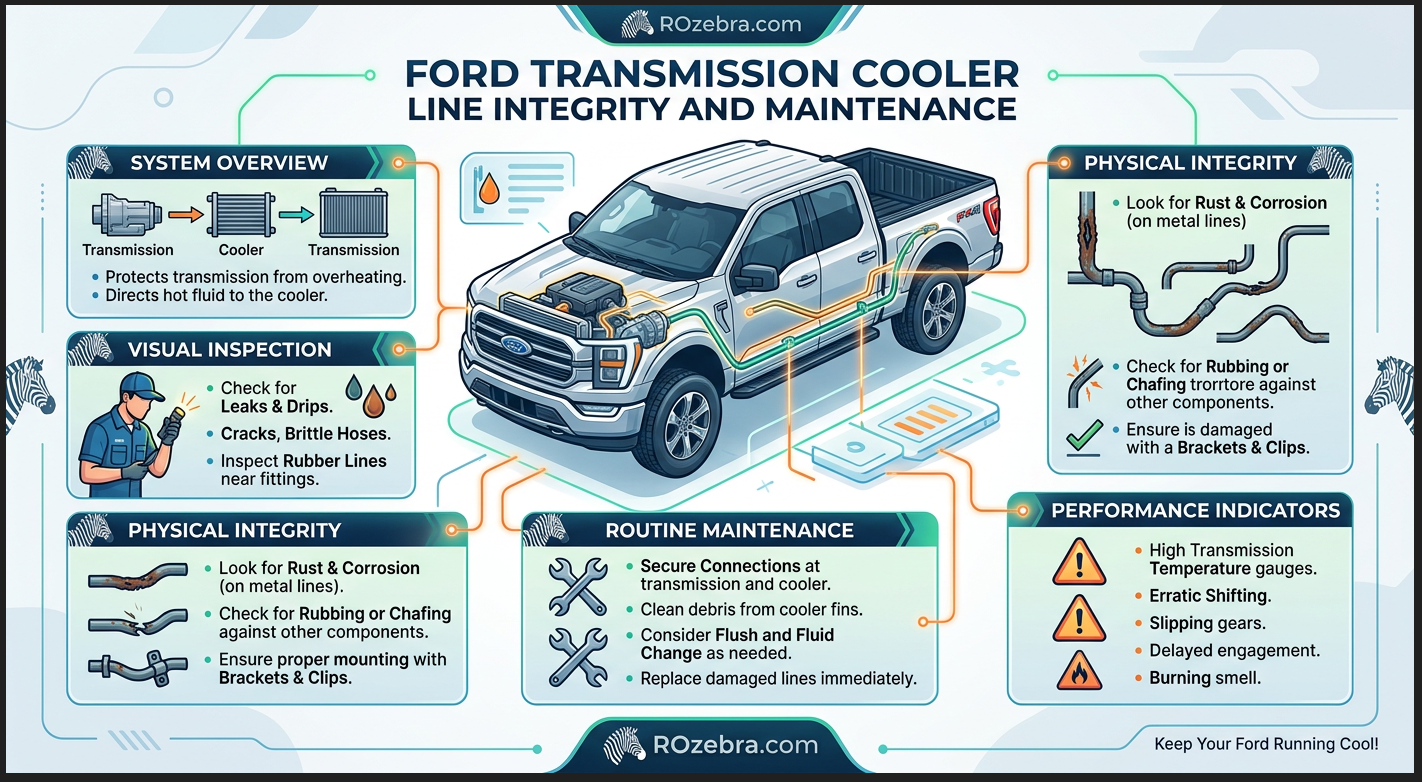
Ford Transmission Cooler Line Integrity and Maintenance
You walk out to your driveway on a Saturday morning and notice a small, dark red puddle resting right under the front bumper of your Ford. Or maybe you are sitting at a stoplight and catch the faint, acrid scent of something sweet yet burnt wafting through the vents. Perhaps you have noticed the transmission feels a bit lazy lately, with a slight hesitation before the truck decides to move after you shift into gear.
To the average owner, these look like minor annoyances or a simple leak. To a technician, however, these are the classic, real-world signs that your transmission cooler lines are failing. It is a ticking clock that could lead to a total transmission failure if ignored.
The Lifeline of Your Drivetrain
The transmission cooling system is the unsung hero of your vehicle. Its job is to move hot transmission fluid from the gearbox to the radiator—and often an auxiliary cooler—to shed the intense heat generated by gears and torque converters.
In many Ford vehicles, particularly the F-150 and Expedition models, this system relies on a combination of rigid steel tubing and flexible high-pressure hoses joined by quick-connect fittings. While these parts are designed for efficiency on the assembly line, they face two major enemies over time: corrosion and mechanical fatigue.
How We Diagnose the Problem
When we put a vehicle on the lift for an inspection, the first thing we look for is seepage. It rarely starts as a massive gusher; it begins with subtle clues that indicate the integrity of the line is compromised.
- The Fuzzy Line: This usually starts at the crimp points where the flexible rubber hose meets the metal line. You might see a film of oily grime that has collected road dust, making that section of the line look fuzzy or wet. This is the earliest warning sign.
- Scaling and Pinhole Leaks: On many Fords, the steel sections of these lines are prone to severe rust, especially if you live in a region where road salt is used. Corrosion eats through the protective coating of the line (known as scaling), creating pinhole leaks that can spray pressurized fluid directly onto hot engine components.
- Quick-Connect Fatigue: The second common failure point is the quick-connect fitting. These use internal O-rings and plastic retaining clips that become brittle after years of heat cycles. If a clip fails or an internal seal shrinks, the line can actually blow off entirely.

The Danger of Sudden Failure
If a quick-connect fitting fails while you are driving at highway speeds, the consequences are immediate. The transmission will pump itself dry in seconds. Without fluid to provide lubrication and hydraulic pressure, the internal clutches will burn up almost instantly. This leads to an immediate internal breakdown and a very expensive repair bill that could have been avoided with a simple line replacement.
More Than Just a Fluid Change
During a routine transmission fluid change, a professional technician should perform a cooling system flush. This is not just about changing the fluid in the pan; it involves ensuring the lines and the internal passages of the cooler are free of debris.
If a previous internal component has started to wear, tiny metal shards can become trapped in the cooling fins of the radiator. If these are not flushed out, they act like sandpaper, wearing down your new fluid and damaging the transmission valves.

Factory Replacement vs. Aftermarket Upgrades
If you find that your lines need replacement, you have a choice to make: go back to factory stock or upgrade the system.
- Factory Replacement: For the daily driver who does not tow or haul heavy loads, factory replacement lines are usually sufficient, provided they are installed with new, high-quality clips.
- Auxiliary Cooler Upgrade: If you use your Ford for heavy hauling, off-roading, or live in a very hot climate, this is the perfect time to discuss an auxiliary cooler upgrade. An aftermarket cooler increases the volume of fluid in the system and provides more surface area for heat dissipation. This simple addition can significantly extend the life of your transmission by keeping fluid temperatures well below the danger zone.

What to Discuss With Your Mechanic
When you take your vehicle in, tell your mechanic you are concerned about transmission line integrity. Ask them specifically to check the following:
- The crimp connections for any signs of oily seepage.
- The steel sections of the lines for scaling or deep rust.
- The plastic retaining clips on the quick-connect fittings for brittleness.
If you are seeing red fluid on the ground, do not wait. A relatively inexpensive set of lines and a bottle of fluid is a much better investment than a four-thousand-dollar transmission overhaul. Understanding these symptoms and the technology behind them ensures that your Ford stays on the road and out of the shop.
Written by Curtis Castiglione



No Comments Yet
Be the first to comment on this article.