Curtis.Castiglione@ROzebra.com
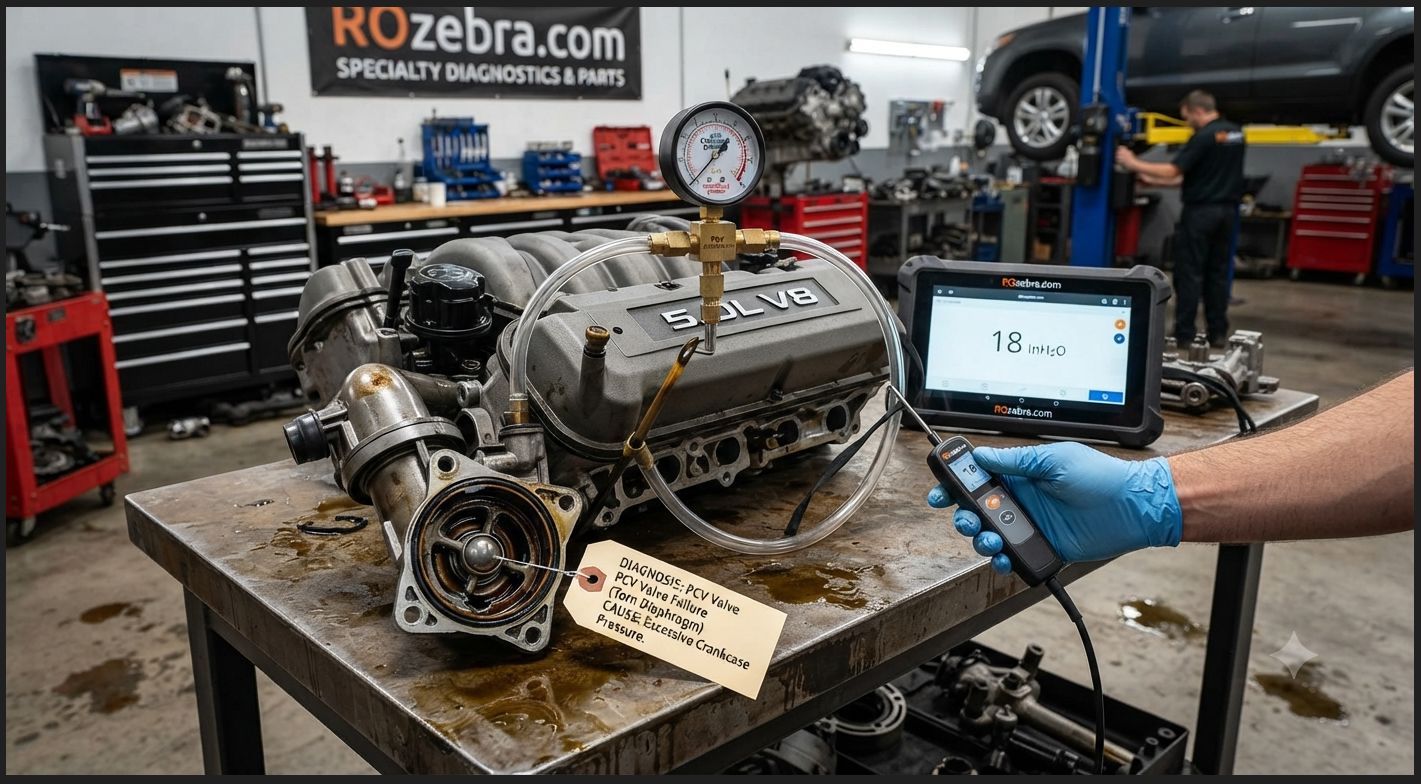
Ford PCV Valve Failure and Crankcase Pressure
Imagine you are sitting at a red light in your Ford F-150 or Explorer, and you notice a slight shudder. It is almost like the engine cannot quite decide if it wants to stay running or take a nap. You might also hear a strange whistling or hissing sound coming from under the hood that vanishes as soon as you hit the gas.
Then, when you pull into your driveway, you spot it: a fresh drip of oil on the concrete. You might even catch a whiff of something burning—that unmistakable, acrid scent of oil hitting a hot exhaust manifold. To most drivers, these signs scream 'major engine failure.' You might fear a blown head gasket or a ruined transmission. However, as a technician, I can tell you that the culprit is often a component no bigger than your thumb that costs less than a tank of gas: the PCV (Positive Crankcase Ventilation) valve.

What Exactly is a PCV Valve?
To understand why such a small part causes such a big headache, we have to look at what is happening inside your engine. When your engine is running, the pistons move up and down to create power. During this process, a small amount of exhaust gas and unburned fuel inevitably slips past the piston rings and into the crankcase. We call this 'blow-by.'
If these gases stay trapped inside the engine, they create immense internal pressure. Over time, they also mix with your motor oil, turning it into a thick, engine-destroying sludge. The PCV system is essentially your engine’s one-way breathing tube. It uses the engine’s own vacuum to pull those nasty gases out of the crankcase and route them back into the intake manifold, where they can be burned off safely.
When the 'Pressure Cooker' Boils Over
The PCV valve is designed to maintain a delicate balance, but over time, it can become gummed up with oil deposits and carbon. When this happens, one of two things usually occurs:
1. The Valve Sticks Closed (The Pressure Cooker Effect)
If the valve will not open, your engine becomes a pressure cooker. That pressure has to go somewhere, so it starts looking for the weakest point of resistance. This usually means it forces its way past your gaskets and seals.
- The Result: You will see oil leaking from the valve cover gaskets, the oil pan gasket, or—most expensive of all—the rear main seal.
- Tech Tip: If I see a Ford engine leaking from multiple places at once, I almost always check the PCV system first. The leaks are not the primary problem; they are just a symptom of a suffocating engine.
2. The Valve Sticks Open (The Lean Condition)
If the valve sticks open, it allows too much air to flow back into the engine at the wrong time. This creates what we call a 'lean' condition, meaning there is too much air and not enough fuel in the mix.
- The Result: This is the root cause of that annoying surging, rough idling, or stalling when you are stopped at a light. You might even see a 'System Too Lean' code appear on your dashboard.
Why Ford Owners Should Pay Attention
Modern Ford engines, particularly the EcoBoost line and high-mileage V8s, are especially sensitive to crankcase pressure. Because these engines use sophisticated turbocharging and variable valve timing, a clogged PCV valve can have a domino effect. High pressure can actually push oil into the turbocharger inlets, leading to blue smoke from the tailpipe and potentially thousands of dollars in turbo damage.
Actionable Advice: The 30,000-Mile Rule
I recommend a PCV system inspection every 30,000 miles. It is one of the cheapest forms of preventative maintenance available.
- The 'Rattle Test': If you are handy, you can check the valve yourself. Remove it and shake it. You should hear a clear, metallic clicking sound. If it is silent or sounds 'mushy,' it is clogged with carbon and needs to be replaced immediately.
- Timing is Everything: If you are already having work done on your valve covers or spark plugs, ask your tech to swap out the PCV valve. The labor is already being done, so it is the perfect time for a fresh start.
Talking to Your Mechanic
When you take your vehicle in, do not just say, 'It is leaking oil.' Be the informed owner. Tell your mechanic:
'I have noticed a rough idle and some oil spots. Can you check the PCV valve and perform a crankcase pressure test before we look at replacing any gaskets?'
Mentioning the PCV system specifically helps your technician narrow down the root cause much faster, potentially saving you from paying for a gasket replacement that would have just failed again anyway. A little bit of attention to this tiny valve will keep your Ford running smoothly—and your driveway clean—for years to come.
Written by Curtis Castiglione



No Comments Yet
Be the first to comment on this article.