Curtis.Castiglione@ROzebra.com
Diagnosing Power Steering Pump Failure
Have you ever been pulling into a tight parking spot and heard a sound coming from your engine that sounds like a haunted house? Maybe it is a low-pitched groan or a high-pitched whine that gets louder and more frantic the further you turn the steering wheel. Or perhaps you’ve noticed a more physical symptom: the steering feels incredibly heavy—like you’re driving an old tractor—while you’re idling at a stoplight, but as soon as you hit the gas and get moving, the power assist suddenly kicks back in.
These aren’t just annoying quirks of an aging vehicle; they are your car's way of telling you that the power steering pump is struggling to keep up with the demands of the hydraulic system. As an automotive technician, I see these issues frequently, and they usually indicate a system that is failing to manage pressure or flow correctly.
The Heart of Your Steering System
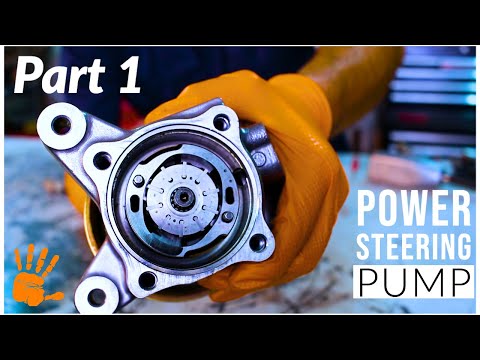
From a technical perspective, the power steering pump is the heart of your vehicle's handling. Most vehicles use a rotary vane pump. Inside this pump, a rotor with several sliding vanes spins within an elliptical chamber. As your engine turns the pump pulley via a belt, these vanes pull hydraulic fluid from the reservoir and force it into the steering rack or gear under high pressure.
When the system is working correctly, you should be able to turn the wheel with minimal effort. When it isn’t, we usually see two primary failures: a loss of total hydraulic pressure or a breakdown in the flow regulation.
Why Is It Making That Noise?
That signature whine is usually caused by one of two specific fluid conditions: aeration or cavitation.
- Aeration: This occurs when air bubbles get trapped in the fluid. If you pop the hood and look in your power steering reservoir while the engine is running and see fluid that looks like a strawberry milkshake, you have aeration. This usually means there is a leak on the suction side of the pump, drawing air into the system.
- Cavitation: This happens when the pump is being starved of fluid. If the fluid is old and has broken down, or if the reservoir screen is blocked, the pump creates a vacuum that causes vapor bubbles to implode. This creates that deep groaning sound that gets worse as the pump works harder.
The Mystery of Heavy Steering at Idle
If your steering feels like a gym workout at low speeds but returns to normal once you’re cruising, the culprit is likely the flow-control valve. This precision-engineered valve is designed to regulate pressure so you do not blow out the seals in your steering rack when the engine is at high RPMs.
If this valve gets stuck open or is clogged with debris, the pump cannot generate enough "push" at low engine speeds. This is why the steering feels "notchy" or heavy during parallel parking but feels perfectly fine on the highway.
How Technicians Diagnose the Issue
When you bring your car to the shop, a good technician will not just guess and start swapping parts. We use a specialized pressure gauge and flow-control valve tester. Think of it as a blood pressure cuff for your car.
By hooking this up in-line between the pump and the steering gear, we can measure exactly how many gallons per minute the pump is moving and at what pressure. We perform a "dead-head" test, where we momentarily close a valve to simulate a full-lock steering turn. If the pressure drops significantly during this test, we know the pump’s internal bypass is failing, confirming the pump needs replacement.
The Hidden Enemy: Contamination
The primary enemy of any hydraulic system is dirt and debris. Over time, the internal components of the pump wear down, shedding microscopic metal particles into the fluid. This debris acts like sandpaper, scouring the precision-machined surfaces of the pump and the flow-control valve.
This is why a simple fluid flush is non-negotiable. If a mechanic replaces a noisy pump without flushing the entire system and cleaning the reservoir screen, those same metal shavings will circulate right back into the brand-new pump, destroying it within weeks.
Actionable Advice for the Vehicle Owner
If you suspect your power steering pump is on its way out, here is what you should do:
- Check the Fluid: If it is dark, smells burnt, or looks foamy, you have a problem that needs immediate attention.
- Observe the Timing: Note exactly when the noise happens. Is it only when the car is cold? Only when turning the wheel to the extreme left or right? This helps your mechanic narrow down the search.
- Ask the Right Questions: When talking to your mechanic, ask, "Did you perform a flow and pressure test to confirm it is the pump?" and "Will you be performing a full system flush to remove debris?"
Steering is a safety-critical system. A sudden loss of power assist during a sharp turn can be jarring and dangerous. Addressing a groaning pump early can save you from the much more expensive job of replacing an entire steering rack damaged by contaminated fluid.
Written by Curtis Castiglione



No Comments Yet
Be the first to comment on this article.