Curtis.Castiglione@ROzebra.com

Diagnosing Honda Suspension Symptoms (2001–2026)
Does your Honda feel like it is sailing on the high seas lately? Perhaps you have noticed a sharp, metallic clunk every time you pull into your driveway, or your car is leaning to one side like it is exhausted after a long day of commuting.
As a technician who has spent over two decades under the chassis of everything from the legendary double-wishbone 2001 Accords to the latest high-tech Prologue EVs, I have seen how Honda’s connected driving feel can degrade. While Honda suspension is famous for its reliability, it is not immortal. Because these systems have evolved from simple mechanical setups to complex, electronically controlled platforms over the last 25 years, diagnosing a problem requires a mix of old-school listening and modern technical knowledge.
Here is a breakdown of what those strange sounds and sensations actually mean for your vehicle.
1. The Clunk, Pop, or Rattle
The Symptom: You hear a knock or pop when driving over speed bumps or turning the steering wheel at low speeds.
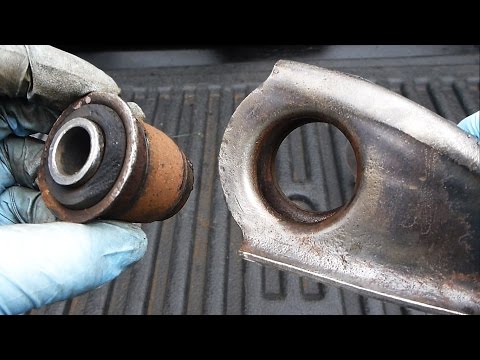
The Tech Explanation: You are likely dealing with worn-out bushings or stabilizer bar links. In earlier Hondas (2001–2005), the suspension relied heavily on rubber bushings to allow components to pivot smoothly. Over time, that rubber cracks, dries out, and shrinks.
When the rubber disappears, you get metal-on-metal contact. This is the root cause of that clunk. On newer models like the 11th-generation Civic, which uses a sophisticated multi-link rear suspension, there are more connection points than ever. If just one bushing fails, the noise telegraphs through the entire rigid chassis.
2. The Boat Ride: Bouncing and Dipping
The Symptom: Your car continues to bounce several times after hitting a dip, or the nose of the car dives toward the pavement when you hit the brakes.
The Tech Explanation: Your dampers (commonly called shocks or struts) are shot. Honda uses gas-charged dampers designed to control the rebound of the coil springs. When the internal seals fail, the hydraulic fluid leaks out, leaving you with nothing but the springiness of the coils to support the car.
On a modern Honda, this is a significant safety issue. These vehicles use Vehicle Stability Assist (VSA). A bouncy suspension can confuse the car’s computers, making your traction control and anti-lock brakes less effective because the tires aren't maintaining consistent contact with the road.
Pro Tip: Look at the body of your shock absorber. If you see an oily, grimy film, the seal has blown, and the unit needs replacement.

3. The Sagging Corner
The Symptom: You notice one corner of the car sitting lower than the others, or the car looks crouched in the rear.
The Tech Explanation: This is usually a fatigued or broken coil spring. This has become a specific concern with the rise of Honda’s hybrid and EV lineup. Models like the CR-V Hybrid or the Prologue carry significantly more weight due to heavy battery packs. While Honda uses high-strength steel for these springs, the constant tension of that extra mass can cause them to sag over time. A sagging spring ruins your wheel alignment, which will eat through your expensive tires in a matter of weeks.
4. The Stiff Ride or System Error Light
The Symptom: Your Civic Type R or Acura Type S feels permanently stuck in its firmest, most jarring setting, or a Suspension System warning appears on the dashboard.
The Tech Explanation: Your vehicle is equipped with an Adaptive Damper System (ADS). Unlike traditional shocks, these use electronic valves to change damping force in milliseconds based on road conditions. If the system detects an electrical fault or a seized valve, it defaults to a fail-safe mode, which is almost always the stiffest setting to ensure the car remains stable. This is not a simple mechanical fix; your mechanic will need a diagnostic scanner to communicate with the chassis control module to find the specific malfunctioning sensor or actuator.
Summary Checklist for the Modern Driver
| Symptom | Likely Culprit | Severity |
|---|---|---|
| Clunking over bumps | Bushings / Stabilizer Links | Moderate - Affects handling |
| Bouncing / Nose-diving | Blown Struts or Shocks | High - Safety and Braking risk |
| Leaning to one side | Fatigued Coil Spring | High - Destroys tires quickly |
| Warning light / Harsh ride | Adaptive Damper Fault | Moderate - Requires electronic diagnostic |
What to Tell Your Mechanic
When you bring your Honda in, specificity saves you money. Don't just say it makes a noise. Tell your technician:
- Does the noise happen only when it is cold outside?
- Do you feel the vibration through the steering wheel or the floorboards?
- Does the noise happen when the steering wheel is turned or only when moving straight?
- Have you noticed any oily spots on your driveway near the wheels?
Honda suspension has evolved into a highly integrated platform. Whether you are driving a 20-year-old commuter or a brand-new electric SUV, keeping these components in top shape is the only way to maintain that precise, connected feel. If you notice these symptoms, get an inspection sooner rather than later. A bushing is much cheaper to replace than a full set of tires and blown struts.



No Comments Yet
Be the first to comment on this article.