Curtis.Castiglione@ROzebra.com
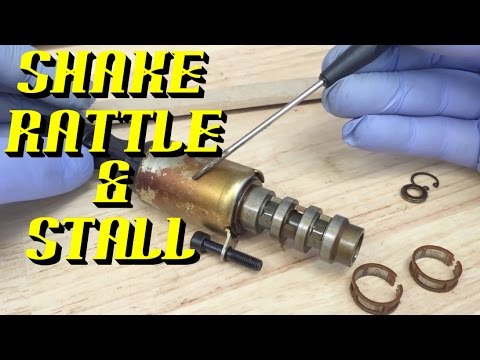
Diagnosing Ford VVT Solenoid Failure
Have you ever been sitting at a red light, foot on the brake, and felt your Ford start to shiver? It is a frustrating and frankly unnerving sensation. One minute you are cruising smoothly, and the next, your engine begins to stumble and surge, feeling like it is just a split second away from stalling out in the middle of traffic.
Maybe you have also noticed that your fuel gauge is dropping faster than usual, or perhaps when you try to merge onto the highway, your truck hesitates and gasps for air before finally finding its power. These symptoms—the rough idle, the poor mileage, and that annoying lag in acceleration—often lead owners to fear the worst, like a failing transmission or a major internal engine problem. However, as a technician who spends most of my day under the hoods of F-150s, Escapes, and Explorers, I can tell you that the culprit is frequently a small, hardworking component known as the Variable Valve Timing (VVT) solenoid.


How Your Ford Breathes: The Ti-VCT System
To understand why your car is acting up, you have to understand how a modern Ford engine breathes. Most current Ford models use a system called Ti-VCT, which stands for Twin Independent Variable Camshaft Timing.
In the simplest terms, your engine needs to change when its valves open and close based on how you are driving. When you are idling, the timing needs to be precise and stable to keep the engine smooth. When you are racing down the interstate, the timing shifts to maximize power and fuel efficiency.
The VVT solenoid is the electro-mechanical gatekeeper of this process. It acts as a valve that directs high-pressure engine oil into the camshaft phasers to adjust that timing on the fly. If the solenoid fails, the engine gets stuck in the wrong rhythm. It is like a runner trying to sprint while taking slow, deep breaths—the timing is simply off, which is exactly why you feel that stuttering or loss of power.
How We Diagnose the Issue
When a client brings a vehicle to the shop with these symptoms, we follow a specific diagnostic path to ensure we aren’t just "parts cannoning" the problem.
1. Scanning for Trouble Codes
The first thing I do is check for a Check Engine light. Usually, VVT issues will trigger diagnostic trouble codes ranging from P0010 to P0025. These codes are the car’s way of telling us that the camshaft timing is either over-retarded or over-advanced.
2. The Electrical Resistance Test
Once we have the codes, we move to the physical part. Using a digital multimeter, I measure the electrical resistance (ohms) across the solenoid's terminals.

For most modern Ford solenoids, we are looking for a specific range, typically between 7 and 12 ohms. If the meter shows "OL" (Open Loop) or an incredibly high number, the internal coil has burnt out. In this case, the part is electrically dead and must be replaced.
3. The Sludge Inspection
The most common and deceptive failure is mechanical. Because these solenoids rely on oil pressure to move, they are incredibly sensitive to the quality of your motor oil. If you have gone too long between oil changes, tiny particles of carbon and sludge can build up.
When I pull a solenoid out of a Ford EcoBoost engine, I look closely at the tiny metal screens wrapped around the shaft. If those screens are clogged with debris, or if the oil looks like thick chocolate syrup, the solenoid cannot slide back and forth as it should. Sometimes, the solenoid gets physically stuck in the "on" position, which is why your car might run fine at 60 mph but try to die the moment you come to a stop.

Understanding Severity and Next Steps
If you are experiencing these issues, the severity is moderate but urgent. While a bad VVT solenoid won't usually leave you stranded on the side of the road immediately, driving with one puts unnecessary strain on your timing chain. If left unaddressed, it can eventually lead to much more expensive repairs, such as full camshaft phaser replacement, which can cost thousands of dollars.
When you take your vehicle to your mechanic, be as specific as possible. Tell them:
- When the shaking happens: Is it only when the engine is warm? Does it happen specifically at red lights?
- Your concern: Mention that you suspect the VVT solenoids and ask them to check the oil screens for sludge.
- Maintenance history: Be honest about your last oil change. This helps us decide if you just need a new solenoid or if you need a specialized engine flush to clear out the debris that caused the failure in the first place.
The best way to prevent VVT failure in a Ford is the simplest: never skip an oil change and always use the specific oil weight recommended in your owner’s manual. These systems are precision-engineered, and they require clean, high-quality oil to keep your engine’s heartbeat perfectly in sync.
Written by Curtis Castiglione



No Comments Yet
Be the first to comment on this article.