Curtis.Castiglione@ROzebra.com

Collision Repair Documentation, Liability, and Legal Protection
In the modern automotive landscape, a collision repair facility has transitioned from a traditional workshop into a specialized engineering environment. When a vehicle leaves the facility, it is a complex network of high-strength steels, aluminum alloys, and sophisticated electronic sensors. However, from a legal perspective, the physical repair is only half of the job.
The second half is the Paper Trail of Safety. If a repaired vehicle is involved in a secondary collision and its structural integrity or Advanced Driver Assistance Systems (ADAS) fail to perform as engineered, the shop’s professional and financial survival hinges entirely on the technical rigor of its documentation. In the eyes of the law, if a process was not documented, it effectively never happened.
1. The Forensic Necessity of the Repair File
Comprehensive shop documentation is no longer an administrative chore performed for insurance reimbursement; it is a critical legal shield. The repair file must serve as a forensic record, proving that the vehicle was restored to specific manufacturer tolerances.
As vehicles move toward higher levels of autonomy, the "Duty of Care" owed by a repair facility has expanded. Courts increasingly view the repairer as the final authority on vehicle safety. Therefore, a litigation-proof file must provide an objective, chronological account of every technical decision made during the repair cycle.
2. The Four Pillars of Litigation-Proof Documentation
To insulate a business from liability and ensure technician accountability, four specific categories of data must be captured, verified, and archived for every structural repair.
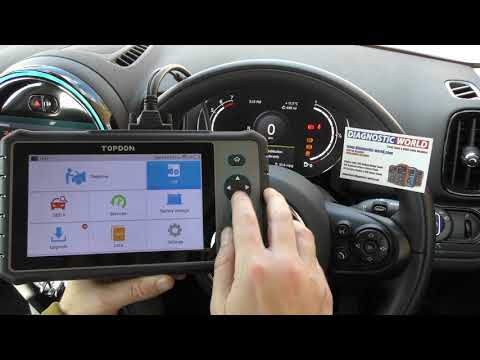
A. Pre- and Post-Repair Diagnostic Scan Reports
Modern vehicles are mobile computer networks. A "Clean Bill of Health" is mandatory to prove the electronic integrity of the vehicle.
- Pre-Repair Scan: Identifies pre-existing faults and hidden collision damage, such as a cracked sensor bracket or a deployed pretensioner, that may not trigger a dashboard warning light.
- Post-Repair Scan: Proves that all modules are communicating correctly and that no "soft codes" or communication errors remain after reassembly.
- Data Requirements: Reports must include the VIN, time stamps, and the specific software version of the diagnostic tool used.
B. Dimensional Measurement Printouts (The 3D Blueprint)
Visual "gapping" of panels is legally insufficient for structural repairs. Shops must provide objective proof of structural alignment.
- Computerized 3D Measuring: Shops must provide "Before" and "After" printouts from systems such as Car-O-Liner or Chief.
- Safety Relevance: This data proves that the structural safety cage and engine cradles were returned to millimeter-specific factory tolerances. This ensures that the vehicle’s "crush zones" will manage energy correctly in a future impact.
C. Structural Joining and Weld Logs
Welding is the most scrutinized aspect of post-repair litigation. A complete file must include evidence of equipment calibration and proper technique.
- Destructive Weld Tests: Documentation must include photos or logs proving the technician performed a "tear test" at the start of the job to calibrate equipment for the specific metal thickness.
- Equipment Verification: The log must document the joining method—whether Squeeze-Type Resistance Spot Welding (STRSW), MIG brazing, or rivet-bonding—and verify it aligns with OEM position statements.

D. ADAS Calibration Verification Sheets
As sensors replace human intuition, the calibration of cameras, radar, and LiDAR is non-negotiable for modern safety compliance.
- Protocol Documentation: The file must record the specific OEM procedure followed, including floor-levelness verification and target placement measurements.
- Success Confirmation: A digital "Success" receipt generated by the calibration software must be attached to the final invoice to prove the safety systems are active.

3. The Legal Definition of a Proper Repair: OEM vs. Industry Standards
A significant legal friction point exists between "Insurance-Approved Estimates" and "OEM Repair Procedures." From a liability standpoint, there is only one defensible standard: The Manufacturer’s Published Procedures.
The Supremacy of OEM Procedures
Courts and regulatory bodies increasingly reject the defense that a shop followed "common industry practice" or "legacy shortcuts" if those practices deviated from the OEM manual. If a manufacturer prohibits sectioning a high-strength steel B-pillar, but a shop performs a sectioning cut to save labor hours or appease an insurance adjuster’s estimate, the shop assumes 100% of the legal liability for any structural failure.
The Chain of Responsibility
While an insurance carrier may influence the financial aspect of a claim, the repair contract is between the shop and the vehicle owner.
- The shop is the professional entity performing the work and holds the ultimate responsibility for safety.
- Documentation must reflect that the shop advocated for the correct repair procedures.
- If a third party mandates a deviation from OEM standards, the shop must document that the customer was informed of the potential safety implications. In matters of structural safety, a shop should never deviate from OEM standards regardless of payment disputes.
4. Operational Friction: Administrative Discipline vs. Shop Velocity
The primary obstacle to perfect documentation is the conflict between Cycle Time (a key performance indicator) and the time required for meticulous data entry.
The Documentation Bottleneck
Technicians are craftsmen, not data clerks. To overcome this, shops must transition to a "Blueprinting" or Repair Planning model where documentation is integrated into the workflow rather than being an afterthought. Using mobile tablets on the shop floor allows technicians to upload photos of weld tests and scan results in real-time.
Archiving for Long-Term Protection
Liability does not expire when the vehicle is delivered. In many jurisdictions, the statute of limitations for latent defects can extend for several years.
- Cloud Security: Relying on paper folders is a risk. Shops must utilize cloud-based management systems (e.g., CCC ONE or Mitchell) that link digital logs directly to the VIN.
- Instant Retrieval: If an inquiry arises years later, the shop must be able to instantly produce the exact 3D measuring report or weld log used during that specific repair.

Key Takeaways for Lesson 9
- The Legal Shield: Comprehensive documentation is the only objective evidence that a shop met its "Duty of Care." It transforms a subjective repair into a verifiable engineering process.
- OEM Compliance is the Only Standard: Insurance estimates are financial documents; OEM manuals are safety documents. In a court of law, the safety document always takes precedence.
- Operational Discipline: Documentation must be a non-negotiable step in the repair process. By embedding real-time digital capture into the daily workflow, shops can maintain high velocity without sacrificing the forensic integrity of the repair file.
Written by Curtis Castiglione Expert in Collision Industry Compliance and Technical Standards.



No Comments Yet
Be the first to comment on this article.